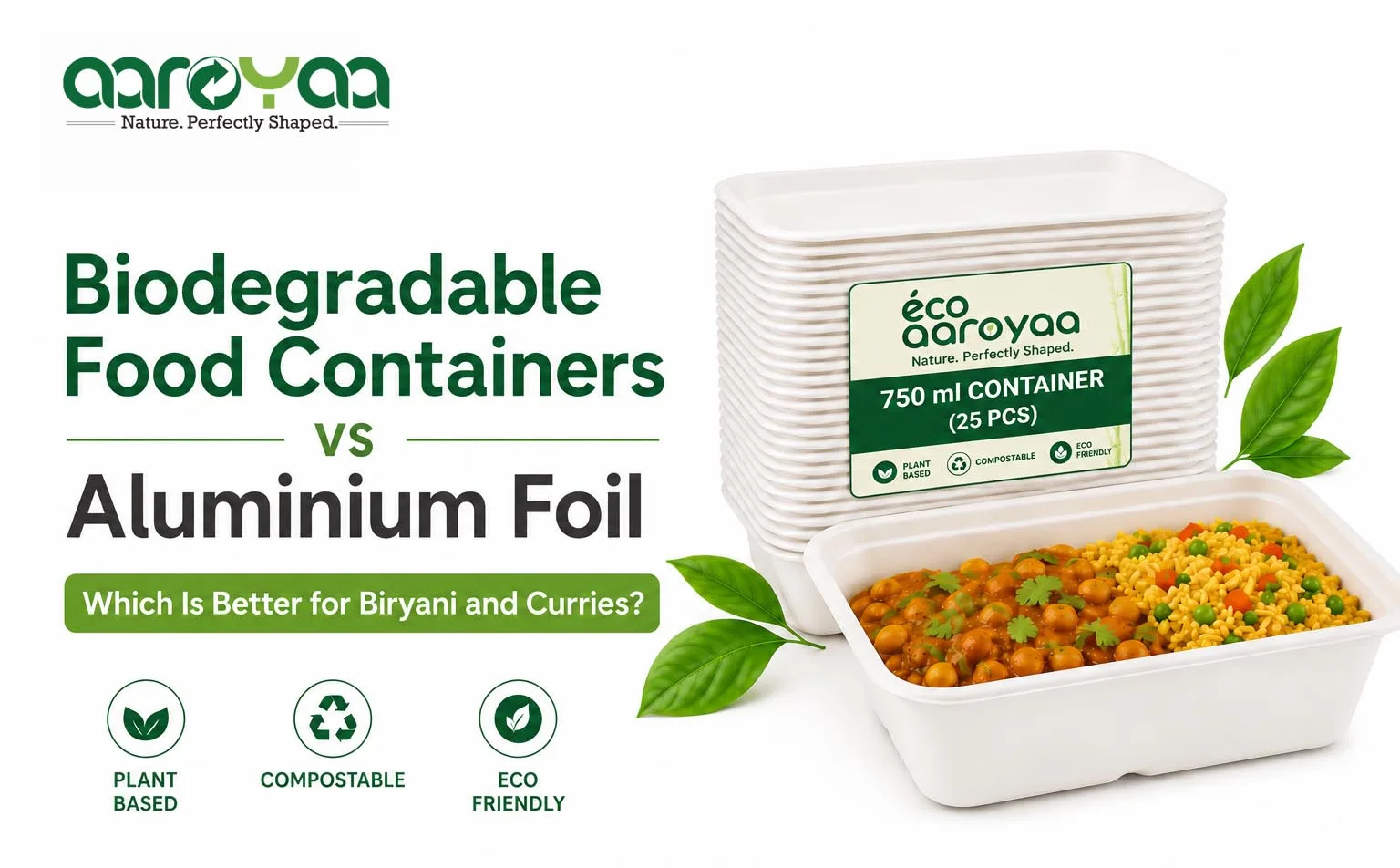
Biodegradable Food Containers vs Aluminium Foil: Which Is Better for Biryani and Curries?
Many delivery kitchens in India will be using silver foil containers. However, when considering a switch to biodegradable packaging, it is worth considering whether it would be a good option for your biryanis and curries.
Foil is relatively cheap, durable and heat- and oil-resistant. Therefore, when considering a switch, it is worthwhile to consider whether using biodegradable packaging would be a better option for your food, or simply just looks better.
Here's the honest comparison.
First, give foil its due
Although foil has many benefits, biodegradable containers can be a better option. They can support heavy biryanis, can be placed directly into ovens, and are extremely cheap. 750ml foil containers cost approximately ₹2.50 each in bulk.
Although this section may seem unnecessary, it has been included to be completely transparent. Although this article is aiming to sell you biodegradable containers, the information is still reliable.
Heat: closer than you'd think
Because aluminium is a good conductor, in ovens it allows heat to transfer quickly. However, in delivery bags, this means that heat can easily transfer into the food. On the other hand, moulded sugarcane fibres provide thermal insulation. As well as this, the material allows some moisture to escape without dripping back onto the food.
However, the overall temperature of the food will largely depend on the delivery bag itself, and how long it takes to reach its destination. We have previously discussed the effect of 45 minutes of delivery on food items on a scooter.
The tomato question
This is where curries come in.
Studies have shown that in acidic foods, liquids and highly spiced foods (typically tomatoes or lemons), using aluminium foil packaging can result in more metal leaching into the food. Many Indian gravies include tomatoes.
It should be noted that much of the research into this was done using oven cooking methods. Due to this high heat, it would be very different to food stored in the foil containers for only 30 minutes. You certainly should not worry about last night's meal;l, however, if your menu contains lots of tomato-based curries, then this could be considered a benefit of biodegradable containers, as there is no contact between food and metal.
Reheating at home
If your customer didn’t eat all of their butter chicken and reheats it in the microwave:
Using foil containers in the microwave is generally not advisable, according to the US FDA. Therefore, most people will transfer the food into a different container. However, fibre containers can be used in the microwave. What is safe and for how long can be seen in our guide to microwaving bagasse.
What happens after dinner
Although foil containers can be recycled (if they are completely clean), containers covered in remaining masala will typically not be able to be recycled. In reality, most foil containers will not be cleaned at all, and so are placed into mixed recycling.
On the other hand, bagasse is designed to be biodegradable. However, not all composting facilities will take bagasse, and so depending on where it is sent, whether it is classed as ‘compostable’ may vary.
Price: foil wins, clearly
Unfortunately, biodegradable containers in this case are more expensive. A 350ml round biodegradable container (with lid) costs approximately ₹22. A 750ml square biodegradable container (with lid) costs approximately ₹31. So they are much more expensive than foil containers.
However, in exchange for this increased cost, food can be more easily reheated at home, tomato gravies have fewer issues, and the packaging won’t be sent to landfill. Depending on what is on your menu, and who your customers are, this may be a good option.
So, which one?
Biryani
This is a close decision. As biryani is quite dry, foil works well. However, if customers are reheating it in ovens/kadhai, it works fine. If they reheat it in a microwave, biodegradable options are easier for customers.
Curries
Biodegradable containers are a better option. As acidic and oily gravies are often reheated in microwaves, foil is less of a good option.
The smart way to switch
If making the change, it is best to slowly change to biodegradable containers. Change curries first (as this point is stronger), and continue to use foil for biryanis to see how customers react.
To test biodegradable containers for one dish, 25 350ml round containers will allow this to be trialled for a week. See all of Aaroyaa’s biodegradable containers here and choose the right sizes for your menu.
Frequently Asked Questions
Common questions related to this article.
Is it safe to use aluminium foil containers for hot curries?
Yes, although it is commonly used for quick deliveries. Research shows that greater amounts of aluminium can leach into food with acidic and spicy contents. This is mainly relevant at cooking temperatures. Therefore, when gravies include a large amount of tomatoes, people are likely to make the switch first.
Can I put food in aluminium foil containers in the microwave?
Generally, it is not advised to do so. It is best to transfer the food into a microwave-safe container.
Are biodegradable containers more expensive than aluminium?
Yes. Foil is a very cheap option. However, biodegradable containers allow for easier reheating in homes and less waste going to landfill.
More stories from Aaroyaa

Can Sustainable Disposable Dinnerware Go in the Microwave or Freezer? (Complete Care & Safety Guide)
What Really Makes Sustainable Tableware Products Green? Six Tests