Deforestation and Your Daily Routine: Why Eco-Friendly Bamboo Tissue Paper Is a Climate Solution
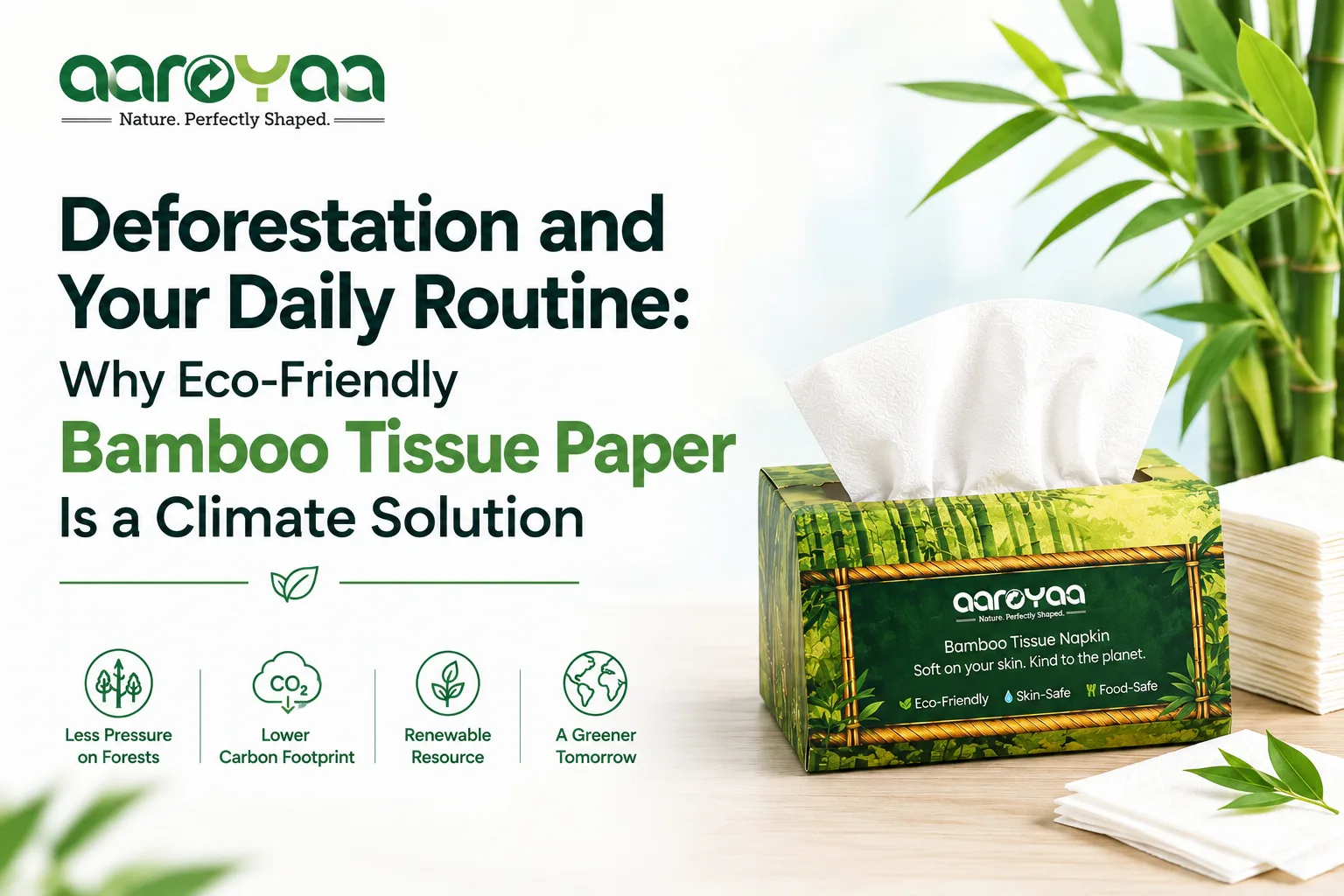
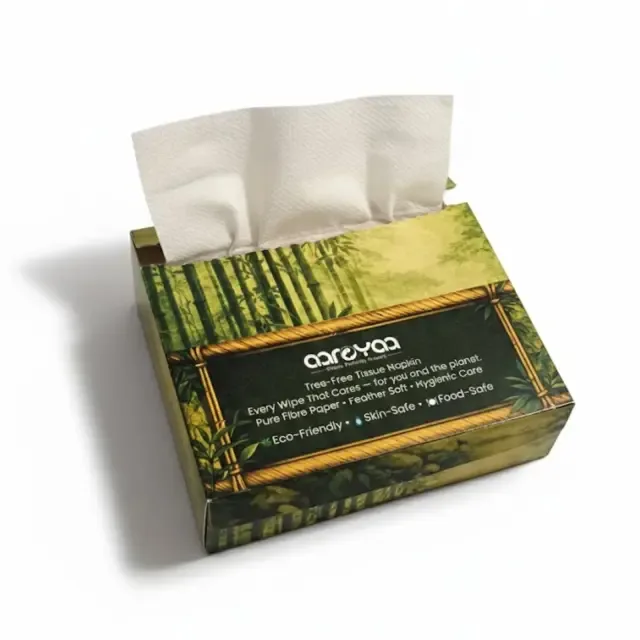
Most tissue is made from wood pulp, and a lot of that pulp comes from trees that have stood for decades. Eco-Friendly Bamboo Tissue Paper uses a grass instead, cut from a clump that regrows from its own roots without replanting. The difference isn't in how the sheet feels. It's in what had to happen before it reached you.
Nobody thinks about this while wiping a table. That's why it's worth two minutes.
The part of deforestation nobody puts on a poster.
When people picture forest loss, they picture cattle ranches and timber. Tissue rarely makes the list.
It should. The Natural Resources Defence Council, an American environmental group, has graded tissue brands since 2019 in a series called The Issue with Tissue. Several of the biggest American toilet paper brands got F grades because their products were made entirely from virgin forest fibre, much of it traced to Canada's boreal forest. Trees become pulp, pulp becomes tissue, and the tissue is thrown away within seconds.
A boreal spruce takes decades to reach pulping size. The napkin made from it lasts one spilt cup of tea. That's the problem: not that we use tissue, but that we use a slow resource for a fast job.
Why a grass changes the maths
Bamboo isn't a tree. It's a grass, and that one botanical fact is why it behaves so differently.
International Bamboo and Rattan Organisation, an intergovernmental agency, states that bamboo can be harvested in the period of three to seven years by selective cutting of a part of the culms each year, and that it regrows without replanting. Cut a tree, and you have cut it. Cut a bamboo and the roots are still there, pushing up shoots.
Here's the bit most brands leave out. INBAR's research shows bamboo forests store less carbon than natural forests, though roughly as much as tree plantations. Bamboo is not a magic carbon sponge. What it does well is relieve pressure, moving a short-lived product off a slow-growing forest and onto a crop that renews in years rather than generations. That's an honest reason to switch, and honest reasons last longer.
Where eco-friendly bamboo tissue paper fits into an Indian home
Indian bathrooms mostly run on water, so this isn't really a toilet paper conversation here. The tissue lives elsewhere. On the dining table. On the counter, for the oil that splatters near the kadhai. On a café table, where three napkins come with one samosa, and two go straight in the bin.
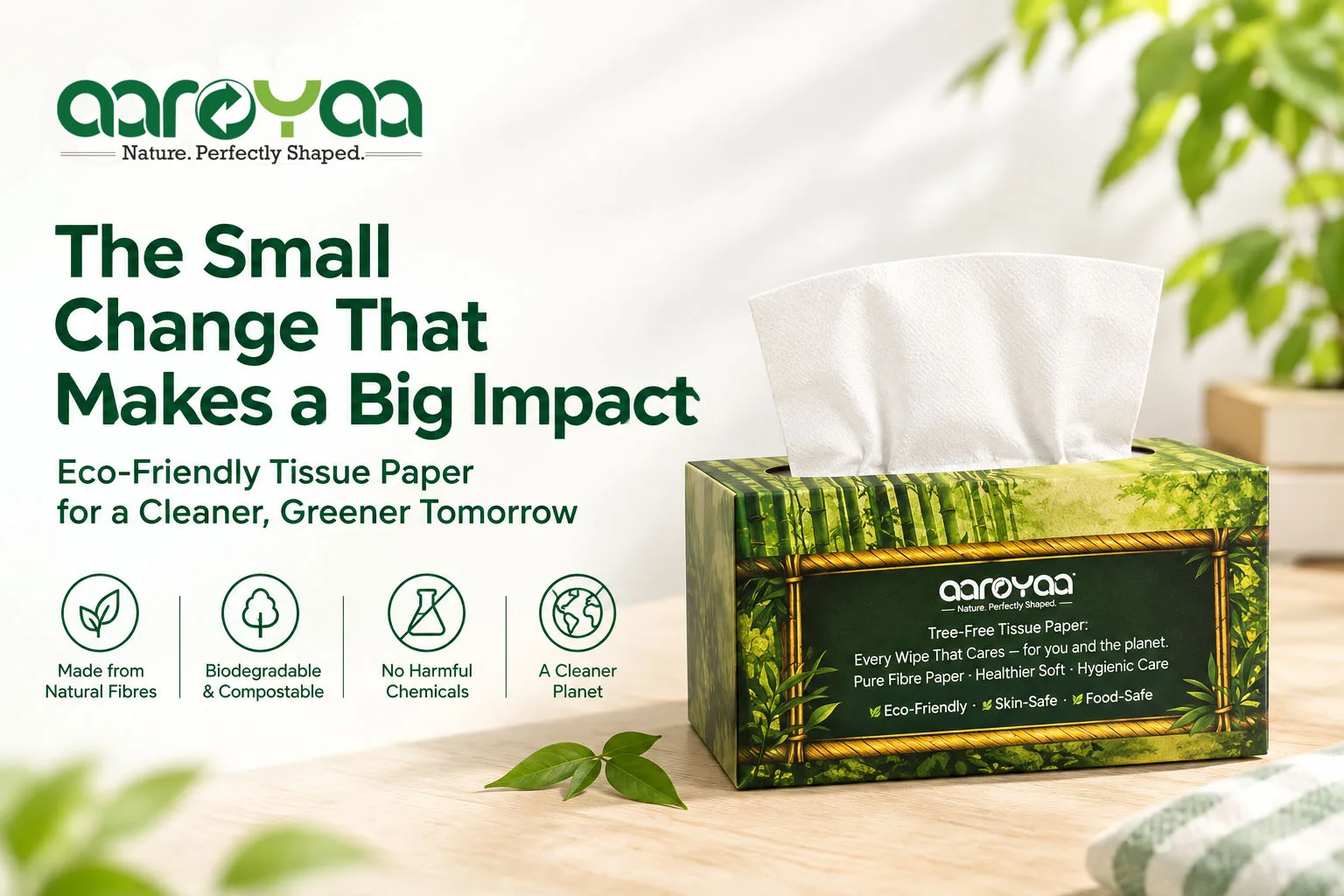
That's the gap Aaroyaa's bamboo tissue is built for. The packs hold 50 pulls each, for dining tables, kitchens, washrooms, offices and cafés. Five packs currently cost ₹300, reduced by 40% from ₹500, which is roughly ₹1.20 a pull. A premium pack of 10 is ₹600 for households that get through tissue faster.
Worth saying plainly: these are pull packs, not toilet rolls, and the page doesn't call them flushable. Use them and bin them.
Make the switch small enough to actually happen
Big resolutions fail. Small swaps stick, because you only decide once.
Replace the box your family reaches for most, usually the one on the dining table, and leave everything else for a month. Buy the smaller pack first and test it on real Indian food: a dal spill, an oily pickle smear, a wet steel glass. If the sheet turns to mush, you've learned that for ₹300 instead of ₹3,000.
Then take one sheet where you'd normally grab three. That habit saves more fibre than the switch itself.
If your tissue box is nearly empty this week, change what refills it. Browse Aaroyaa's eco-friendly bamboo tissue paper or go straight to the pack of five.
Frequently Asked Questions
Common questions related to this article.
Does switching to bamboo tissue help to reduce deforestation?
One person's tissue will not make a difference in the world. What it will do, however, is dictate which crops are planted depending on what the individual buys. Normal tissue is made up of virgin wood pulp, which means cutting down a slow-growing tree for every roll is necessary. Bamboo is a quick-growing clump that is harvested and regrows in a few years. The NRDC's scorecards can help you find responsibly sourced bamboo tissue paper and recycled tissue paper products.
Is eco-friendly bamboo tissue paper as good as normal tissue paper for everyday use?
With regard to wiping surfaces such as tables with hand wipes, it is possible to say that regular bamboo tissue paper performs about as well as average products. Its quality depends on the brand and processing technology, so some are rougher while others are softer. Aaroyaa Company promises to provide soft and highly absorbent tissues for use in food service and daily hygiene. Just try a pack of these tissues in your restaurant for a week, and you will form your own idea about them.
Does bamboo absorb more carbon than trees?
Not necessarily, so be careful with that claim. INBAR's research shows bamboo forests store less carbon than natural forests and about as much as tree plantations. The advantage is the speed of the harvest cycle, not the size of the store.