
We've all probably done it at some point. You buy a pack of compostable plates, feel smug knowing you are saving the planet from plastic and throw your used plates in the bin and forget all about them.
Have you ever wondered what actually happens to them?
Well, to give you a genuine answer, I have created a simple experiment that you can do. Bury your plate and take photos every 15 days. All you'll need is a spade, phone and a little patience!
Here’s what a sugarcane bagasse plate typically goes through in moist garden soil, check-in by check-in.
First, what’s in the plate?
Aaroyaa’s compostable plates are made from sugarcane bagasse. It’s the dry, stringy fibre left behind once the juice is squeezed out of the cane. For years, mills simply burned most of it. Now it gets pressed into plates sturdy enough for hot dal, oily pakoras and a quick round in the microwave.
Why does that matter here? Because bagasse is plant fibre. Fungi, bacteria and earthworms already know how to eat it. Plastic is a different story. Soil has no real appetite for it.
10-minute setup!
Choose an area of the garden or a large pot and dig a hole about 6-8 inches deep. Add a used plate (it’s better if there are some bits of food on it), then add a little water and bury it. Stick a stick in this area.
Take your Day 0 picture. You need to keep it the same every time. This will create a really satisfying video!
Want a twist? Bury a plastic plate right beside it. You’ll see why soon.
The diary: what to expect every 15 days
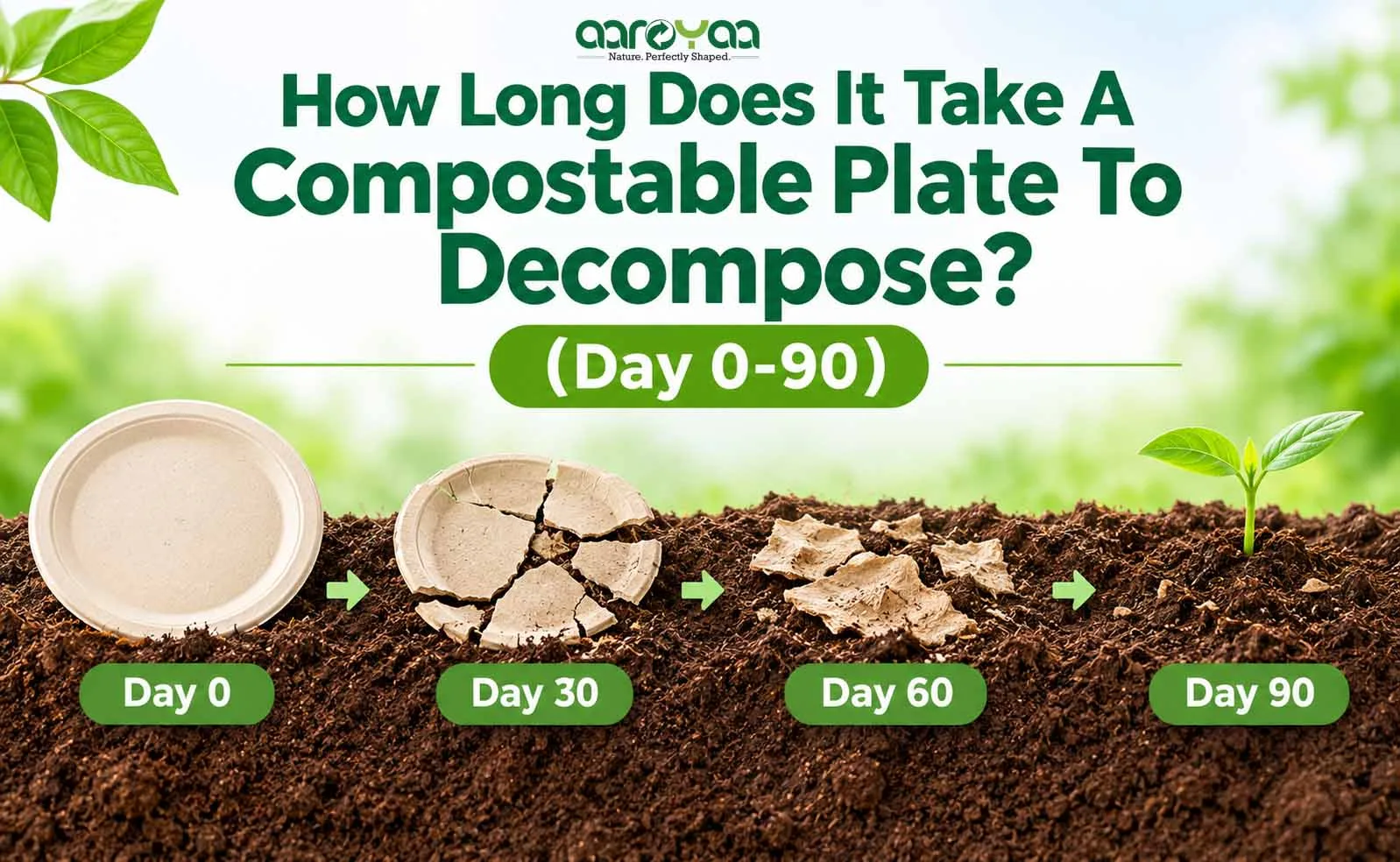
Day 0. Firm, clean, pale. It looks like a plate. Nothing to report.
Day 15. Darker and damp. The edges have gone soft, and if you bend it, it flops instead of snapping. Not exciting yet. Stay with it.
Day 30. This is usually where people get hooked. Small holes start to appear. You might spot fine white threads spreading across the surface. Don’t panic. That’s fungi at work, and it’s exactly what you want.
Day 45. The plate stops looking like a plate. The rim crumbles between your fingers. Sometimes tiny roots have pushed right through it.
Day 60. Fragments now. A few coin-sized bits, mostly mixed into the soil.
Day 75. You’ll have to dig around to find anything at all.
Day 90. Mostly gone. Just dark, crumbly earth where the plate used to be. And the plastic one next to it? Dirty, sure. Otherwise, it looks just like Day 0.
So, how long do compostable plates take to decompose?
Honestly, it depends on where they end up. In warm, moist soil, a bagasse plate usually breaks down in roughly 60 to 90 days. An industrial composting facility, with its higher heat, gets there faster. Cold weather or dry soil slows everything down.
Here’s the part people miss. A plate tied up in a plastic bin bag and dumped in a landfill, with little air and few microbes reaching it, can sit there for a very long time. The material is only half the job. Where you put it is the other half.
Want it quicker at home? Tear the plate up first and keep the soil damp.
Why bother doing this at all?
Because seeing is different from reading. “Biodegradable” on a label is easy to scroll past. Watching a plate slowly turn into soil in your own backyard stays with you. So does the plastic one that just... stays.
It also makes great content. Seven photos stitched together give you a 15-second Reel or YouTube Short that people actually stop to watch. Kids love it too.
Start your Day 0 this week.
You only need one plate to begin. Most people grab a full pack anyway. Once you switch, plastic starts to feel a little odd.
Aaroyaa’s 7-inch round compostable plates come in packs of 100 and work out to under ₹5 a plate at the time of writing. Hosting a small get-together? The Insta Party Pack for 10 people gives you a ready eco dining set in one box. Or browse the full compostable tableware range, with bowls, compartment trays and wooden cutlery, crafted by women artisans in India.
Use the plates at your next meal. Keep one aside. Bury it, snap that first photo and set a reminder for 15 days from now.
Ninety days later, you’ll have your own answer. And a pretty good video to go with it.
More stories from Aaroyaa
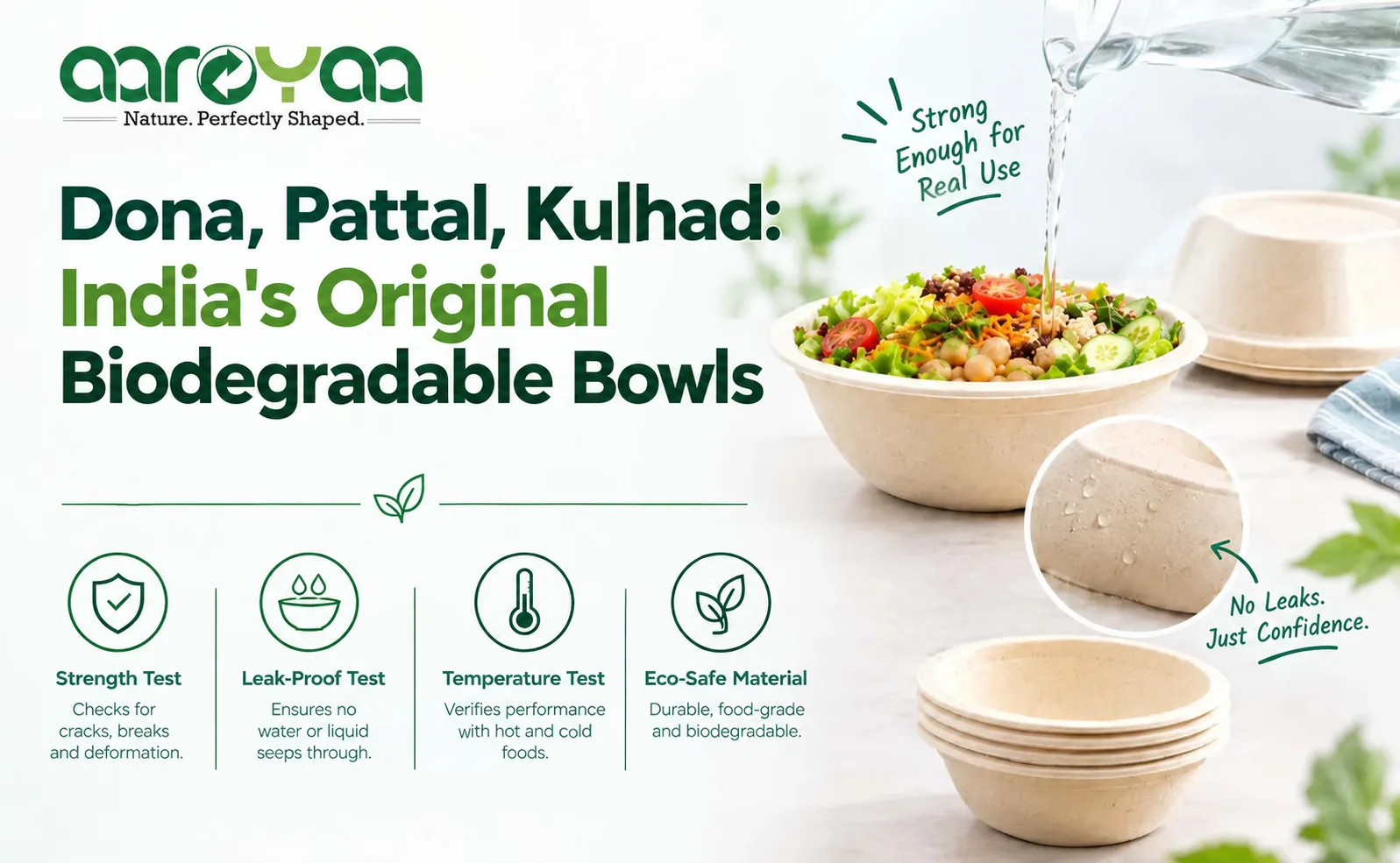
Dona, Pattal, Kulhad: India's Original Biodegradable Bowls
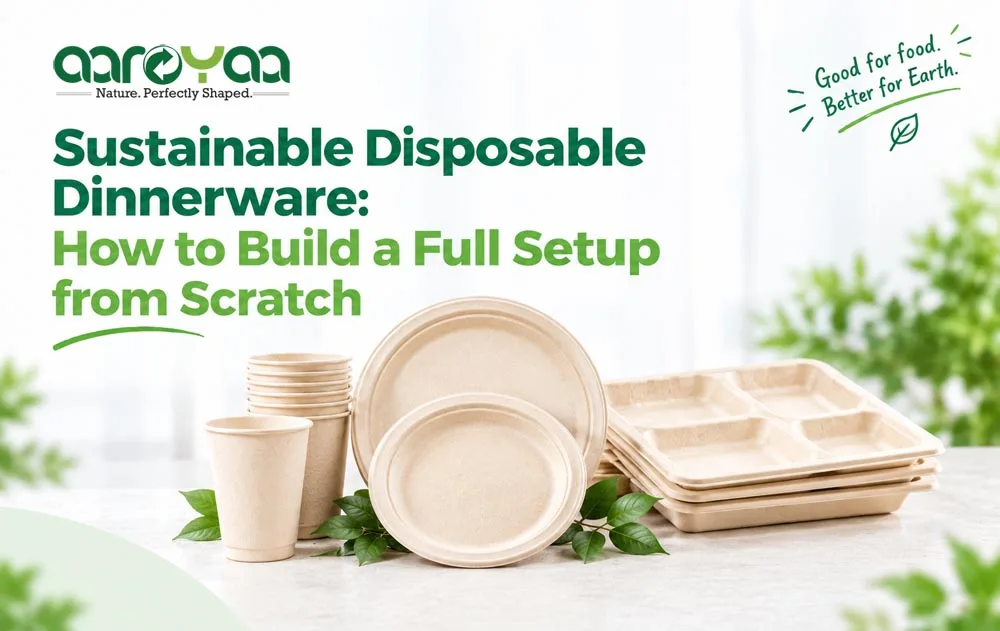
Sustainable Disposable Dinnerware: How to Build a Full Setup from Scratch