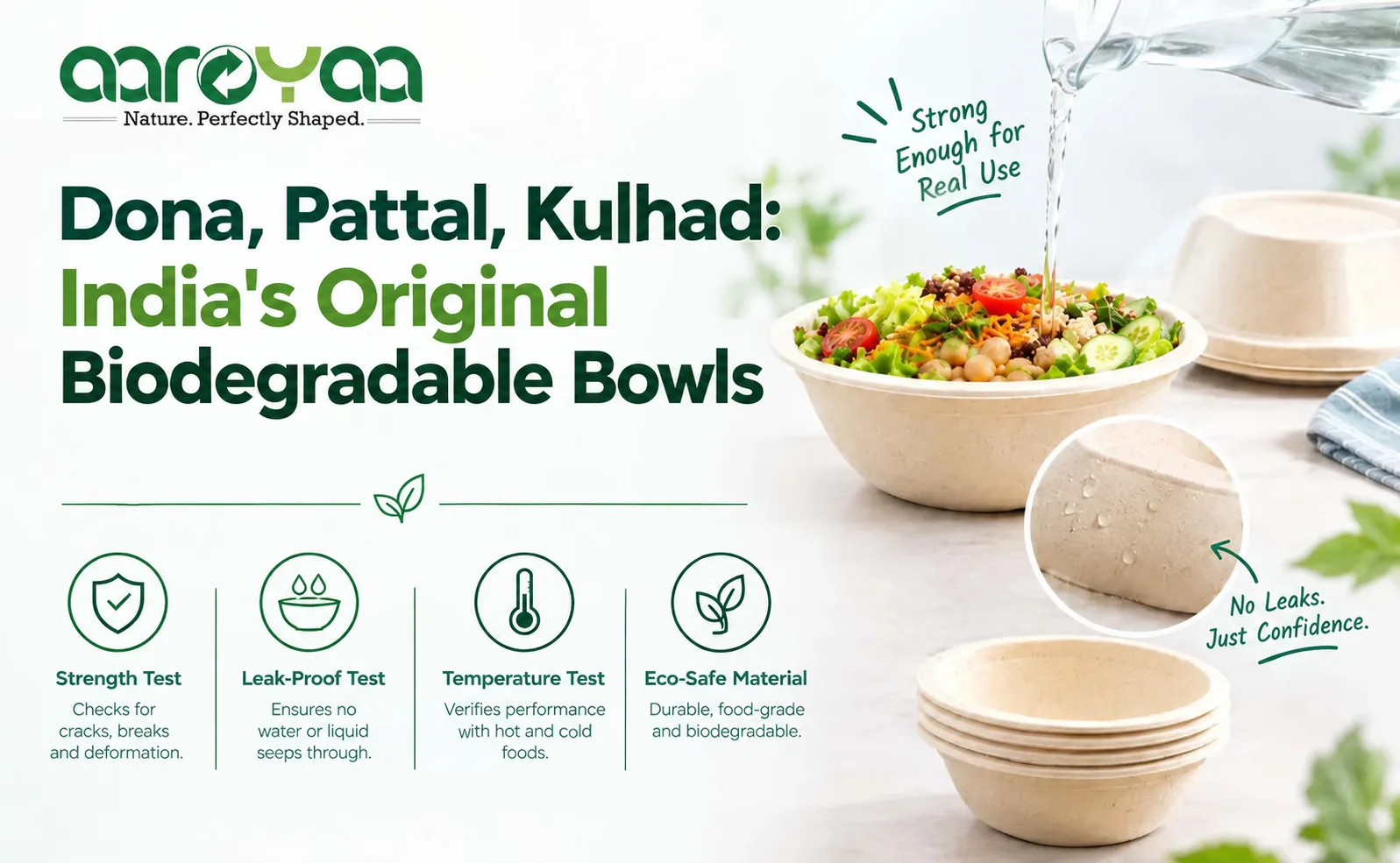
Dona, Pattal, Kulhad: India's Original Biodegradable Bowls
The last time you had your chai in a kulhad, you would have noticed the earthy smell of the clay. You would have noticed the cup's uneven edges. After finishing it, you would have easily disposed of it because everyone did so. No one mentioned it was an eco-friendly option. In fact, the idea of using biodegradable bowls in India started way before the term was even on products.
This means that going green is not a new trend that we copied but something we already knew about.
Before Plastic, India Already Had Biodegradable Bowls
The pattal. Pattal is a type of plate that is made using leaves (usually sal/siali). These are sewn together using thin sticks or bamboo strips. Tribal women in Odisha and Jharkhand still gather and sew the leaves together. This is a slow process requiring great skill and is relied upon by the whole family. In the south, banana leaves do the same job.
The dona. Dona is a smaller version of the pattal. They are made from the same leaves but are folded and pinned into a cup shape. If you have ever had chaat from a street cart, jalebi from a mela or prasad outside a temple, then you have probably used a dona.
The kulhad. A kulhad is a clay cup. They are made by hand by a potter and then placed into the kiln. They can be found everywhere from lassi shops to train stations. In 2020, the Railway Ministry said that almost 400 stations were using kulhads to serve tea again. They want more to do so.
One honest note. A kulhad doesn't rot away like a leaf. Fired clay is closer to a brick. Smashed, it breaks down into bits that are about as harmless as soil, and that's why it fits this list.
So Where Did They Go?
Convenience won. In the 1990s, thermocol plates and plastic cups became cheap and identical, and they didn't leak. A leaf dona holding watery dal can let go at the worst moment. Hosts noticed.
So the switch made sense at the time. The bill came later, in drains, landfills and cattle eating plastic at the edge of every wedding ground.
Where the Old Idea Meets Today's Kitchen
This is where modern biodegradable bowls come in. Bagasse is the fibre left behind after sugarcane is crushed for juice. Pressed into shape, it holds gravy better than a folded leaf, stacks neatly, and comes in sizes you can plan around.
Aaroyaa even makes a Dona Bowl in 150 ml, shaped after the classic. At the time of writing, a pack of 50 works out to a little over ₹4 a piece.
Let's be fair, though. A bagasse bowl isn't a leaf dona. If you can buy leaf plates directly from the women who stitch them, do it. That money goes straight to a village. Bagasse makes more sense when you need hundreds of identical pieces, lids for takeaway, or food that won't sit flat on a leaf.
Picking the Right Size
Choosing biodegradable bowls is mostly about portions.
For chutney, sweets, chaat or prasad, 120 to 150 ml is enough. For dal, raita or kheer, go for 240 to 350 ml. For biryani, noodles or a full takeaway meal, 750 to 1000 ml, ideally with a matching lid.
Buy one or two sizes, not five. Too many sizes is how half the stock ends up sitting in a cupboard.
Carry It Forward
Your grandparents didn't need convincing. They ate off leaves because it made sense. We can make the same choice again, just with better tools.
If your next event, café menu or family function needs biodegradable bowls, take a look at Aaroyaa's bagasse bowls collection. And share this with the person who says eco-friendly is a Western idea. Indian kitchens were doing it long before anyone gave it a name.
Frequently Asked Questions
Common questions related to this article.
Are dona and pattal still made in India?
Yes. Sal and siali leaf plates are still stitched by hand, largely by tribal women in Odisha and Jharkhand, and sold in local markets.
Is a kulhad biodegradable?
Not quite in the strict sense. It's fired clay, so it breaks into harmless fragments instead of decomposing like leaves or bagasse.
What are modern biodegradable bowls made of?
Common options include sugarcane bagasse, areca palm leaf and paper. Bagasse is popular because it's sturdy, holds liquids well and is made from leftover crop waste.
More stories from Aaroyaa
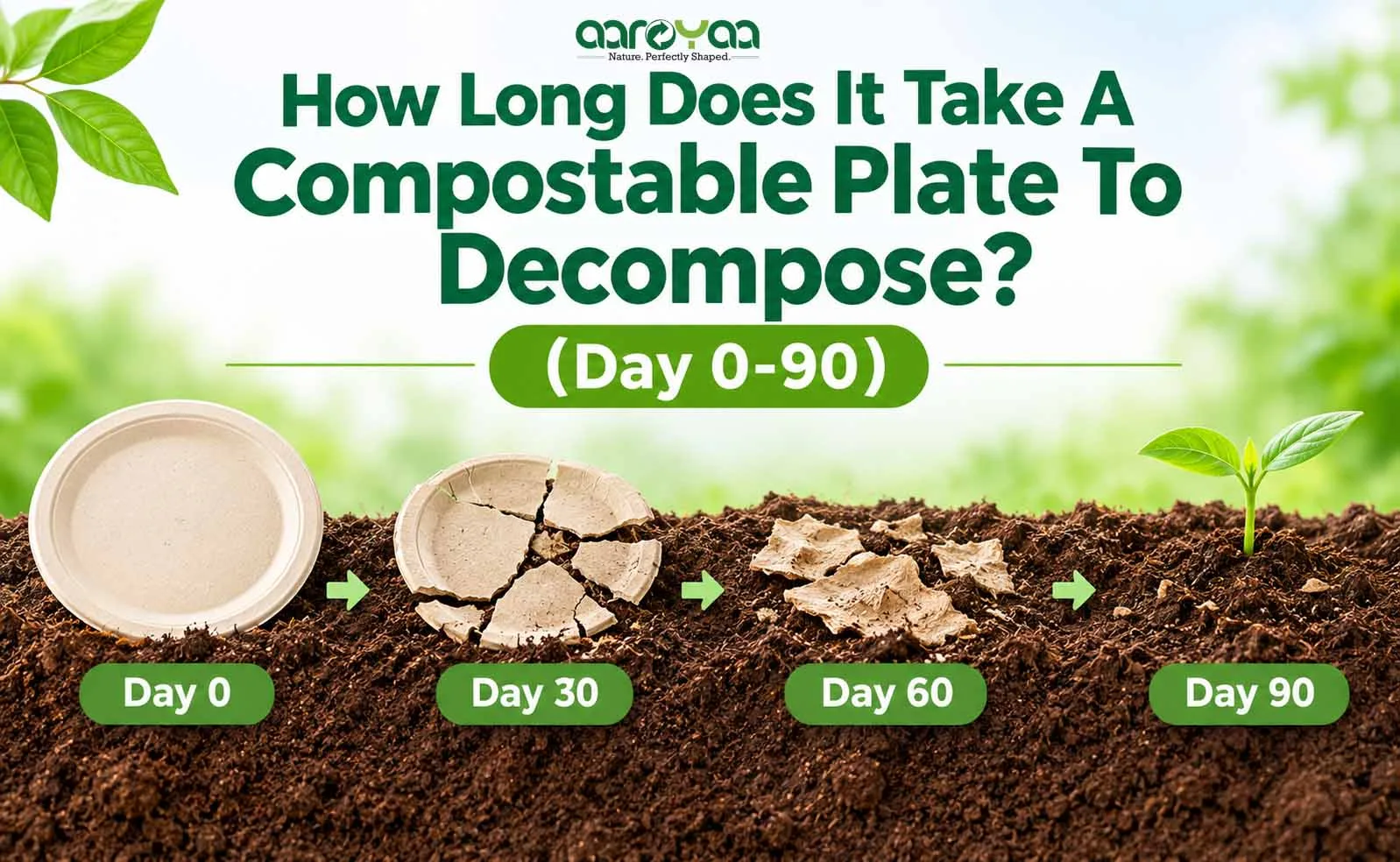
How Long Does It Take A Compostable Plate To Decompose? (Day 0-90)
Sustainable Disposable Dinnerware: How to Build a Full Setup from Scratch