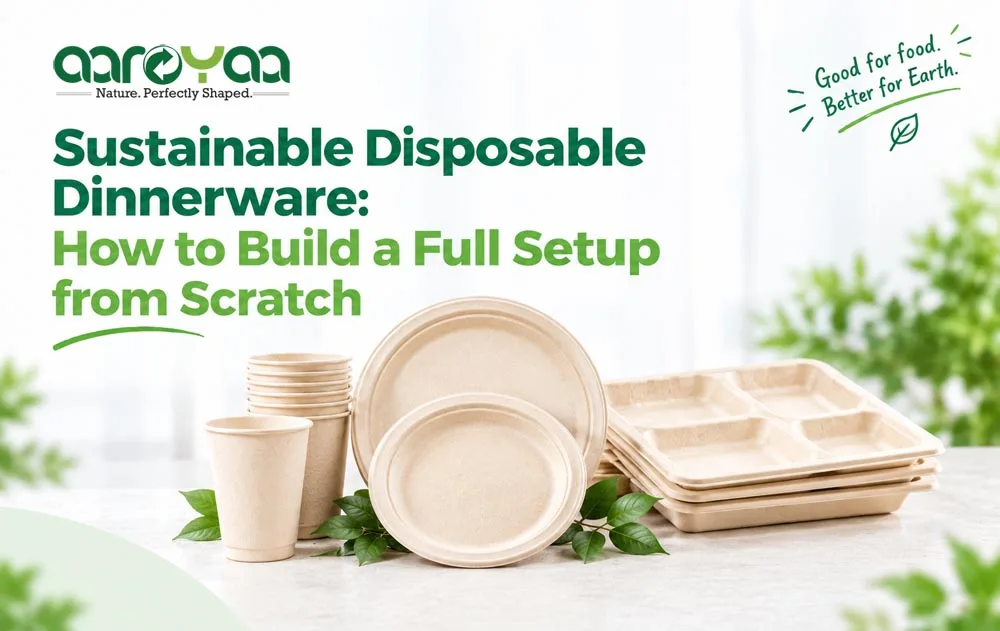
Sustainable Disposable Dinnerware: How to Build a Full Setup from Scratch
Most people buy their first pack of sustainable disposable dinnerware the same way. They see a nice plate, order a hundred, and find out on day one that they have nothing to put the dal in.
It happens in home kitchens, office canteens and at first-time events. The plates were never the problem. The missing pieces were.
So let's build the whole thing properly, in an order that saves you money.
Start Your Sustainable Disposable Dinnerware Setup With the Menu
Open any shop page, and you'll want to buy everything. Don't. Write down what you actually serve first.
A dry snack needs a tray. Rice and sabzi need compartments. Anything with gravy needs a container with a lid that sits tight. Chutney or dessert needs something small.
That short list is your shopping list. The rest can wait.
The Four Pieces Almost Every Setup Needs
Strip it down, and most kitchen setups come down to four things.
A clamshell that contains the whole meal, hinged so that it closes on itself, without having to fumble around with a separate lid. A three-compartment 8x8 that keeps your roti away from your curry, which is more important than you think
Round containers with lids for holding anything wet. A 250 or 350 ml container covers all your needs for raita, dal and halwa. Be sure to get the right lid for the right size, but that's where Aaroyaa comes in handy with a lid that fits 250 and 350 ml round containers.
Finally, a tray to hold your samosas and pakoras, or whatever else salty and delicious you have alongside your meal. Something small that can hold a plate of cake as well.
Napkins. Easy to forget, and people notice when they're missing. Bamboo tissue is a sensible swap.
That's the base. Sound too simple? Good. Simple setups are the ones people stick with.
Three Setups, Three Different Needs
A home or cloud kitchen. Your food travels. Lids matter most here, because a leaking box loses a customer faster than a late delivery does. Lean on clamshells and lidded containers and mostly skip open plates.
A canteen. An honest point first. If the same 40 people eat with you every day and someone is there to wash up, steel plates may serve you better than any disposable. Sustainable disposable dinnerware earns its place during the lunch rush, at the takeaway counter, and on days the dishwasher doesn't turn up. Stock it for those moments, not for everything.
Your first event. Count your guests, then add about 15%. Someone always takes a second plate for dessert. Someone drops one. If food will sit out for a while, go for compartment plates or rectangle plates with lids. Keep a few containers aside for leftovers too. Guests are usually happy to take food home, and it beats throwing it away.
The Small Details That Save You Later
A few things people tend to learn the hard way.
Store your stock somewhere dry. Plant-fibre products like bagasse don't like damp shelves, especially in the monsoon. Keep cartons off the floor.
Order lids and containers together, from the same seller. Mixed brands rarely fit well.
Do a test run. Fill one container with your hottest, oiliest dish and leave it for 30 minutes. You'll learn more from that than from any product description.
Then do the per-piece maths. Most packs come in 25s. At the prices listed when we checked, a 6x6 clamshell worked out to roughly ₹14 a piece and a 250 ml round container to about ₹12. That's the number to compare, not the pack price.
Why a Complete Setup Matters
A half-built setup has a weak spot. The day you run out of eco-friendly boxes, someone grabs plastic ones from the shop down the road. That's usually where good intentions end.
A complete setup removes that moment. What you need is already on the shelf.
You don't have to buy it all at once, either. Start with the four basics and add what your menu asks for.
When you're ready to put your first order together, the Aaroyaa kitchenware range has clamshells, containers, lids and trays in packs of 25, made in India and delivered across the country.
Frequently Asked Questions
Common questions related to this article.
What should I purchase first to create a sustainable disposable dinnerware system?
If you will be packing food in the items, clamshells and lidded containers should be packed first. If you are serving from the hotel, you need to start with compartment plates and then add trays and napkins.
How many of each piece do I need to buy for a function?
Take the number of guests and add about 15% for seconds, dessert, and waste.
Is sustainable disposable dinnerware better than steel?
Not always. For daily meals with washing available, steel is hard to beat. Disposables make more sense for takeaway, peak hours and events where washing isn't practical.
More stories from Aaroyaa

Biodegradable Food Containers: What They Are and How to Choose the Right Ones
From Sugarcane to Supper: How Bagasse Becomes Biodegradable Tableware