Biodegradable vs Plastic Tableware: Why the Eco Plate Costs More, and Where That Money Goes
You pick up a pack of sugarcane plates, glance at the price, and do the maths without meaning to. About eight rupees a plate. The plastic ones at the corner shop go for a rupee or two.
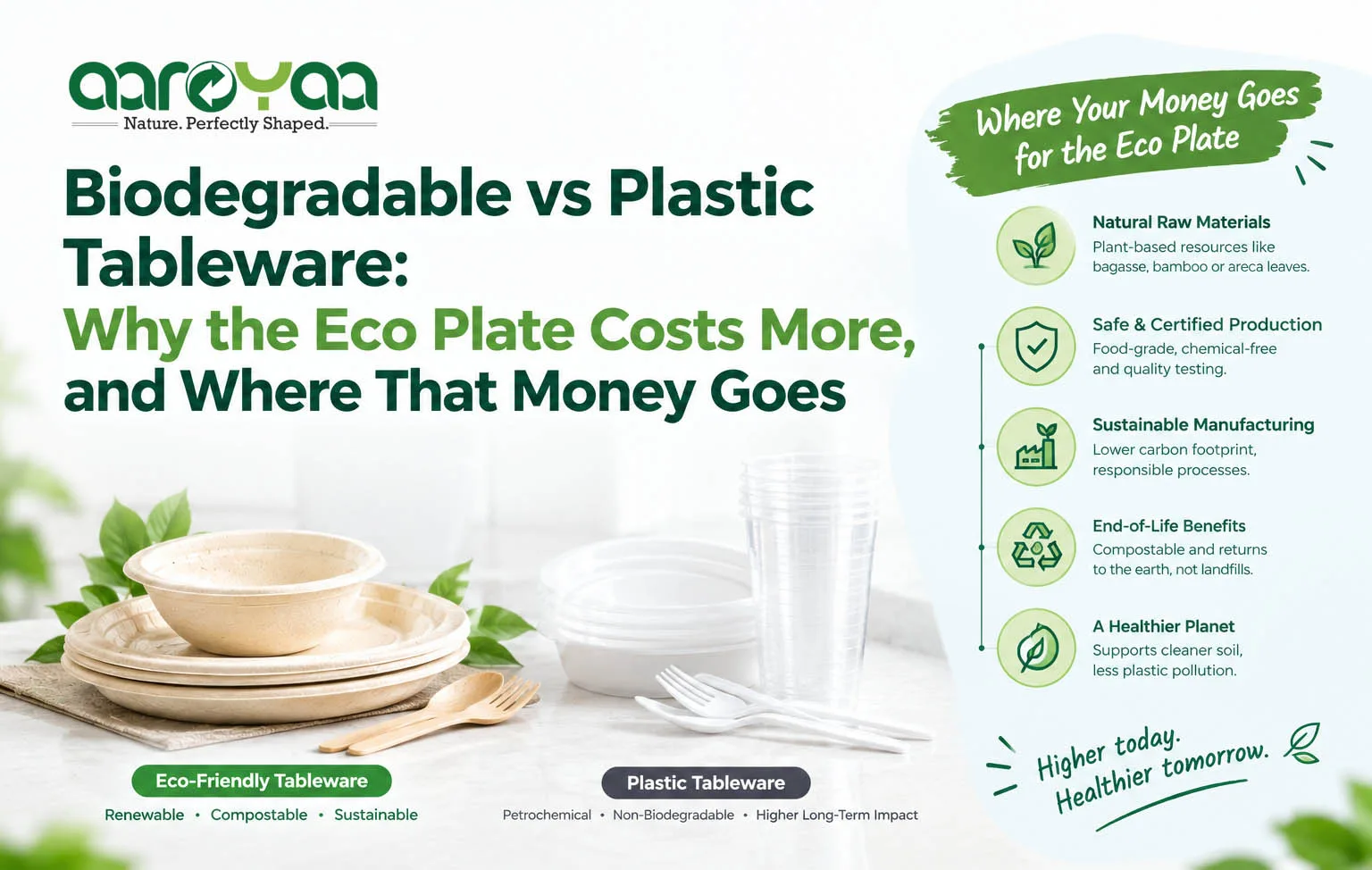
So what are you paying for? The honest answer in the biodegradable vs plastic tableware debate is not "it's eco, so it's premium." The gap has real, slightly boring, very physical reasons. Once you see them, the price starts looking less like a markup and more like a receipt.
Biodegradable vs plastic tableware: two very different starting points
Plastic begins as a by-product of oil refining. Petrochemical plants turn out polymer pellets by the shipload, and they've been fine-tuning that for about seventy years. The raw material is cheap because the system behind it is enormous.
Bagasse starts in a sugar mill. It's the dry, stringy fibre left after sugarcane is crushed. Free waste, you'd think.
Not really. It takes collecting, cleaning, pulping and transportation. Also, it arrives mostly in the crushing season, so they need to buy and stock up for the whole year. So it costs more than pellets that come in sacks every week.
The minutes inside the machine
This is where most of the difference hides.
A plastic plate is formed in seconds. One line can make thousands an hour.
A bagasse plate takes its time. A moist pulp is fed into a heated metal mould and left to set under pressure until the water has been squeezed out and the fibres have set into a rigid plate. Each cycle runs far longer than for plastic and requires a lot of electricity. Trimming, checking and sterilising follow. Here's the full story of how eco-friendly disposable plates are produced.
Fewer plates per hour. More power per plate. Expensive moulds. Each adds a few paise, and paise add up.
Scale changes the maths.
Because of the enormous volumes of plastic disposables produced, the cost of every machine used is dwarfed by the amount of output.
As the industry is still fairly new in India, the production is mostly done by small and mid-sized companies, which means that every plate has a higher share of the overhead. And you remember how expensive those first LED bulbs were? But then the demand spiked and prices dropped. And the same will happen to the compostable plates.
The testing you never see
A plate that must hold hot dal and also break down in compost has two jobs to prove. Careful makers check for leaks, oil resistance, heat tolerance and food safety. Compostability has its own standards too, with IS/ISO 17088 the one most often cited in India.
Cheaper products often skip this. You won't notice on the shelf. You'll notice when a plate folds under a ladle of rajma. See how Aaroyaa's bowls are tested for leak-proofing.
The cost of plastic leaves off the bill.
A plastic plate is cheap at the counter because someone else pays later. The worker sorting garbage by hand. The drain chokes every monsoon. The neighbourhood breathes smoke when a dump is set on fire. India banned plastic plates, cutlery and several other single-use items in July 2022 for exactly these reasons.
A bagasse plate in a compost pit breaks down within a few months. Here's where biodegradable tableware really goes after the bin.
So, is the difference worth it?
Per plate, biodegradable costs more. Per event, the gap is smaller than most people expect.
At the current offer price, a pack of 25 nine-inch bagasse plates costs about ₹8 per plate. So a 50-guest dinner will cost about ₹300 more than the cheapest plastic. A little more than one dish on the menu.
One final thought: for daily meals at home, steel is still better than any disposables.
If you've done the math on biodegradable vs. plastic tableware and the numbers look good, browse the bagasse plate assortment or the entire tableware collection. Need to order for the cafe or a big event? Our bulk orders department will give you a price for the required quantity.
Now you know where every rupee goes. Spend it where it does some good.
Frequently Asked Questions
Common questions related to this article.
Why is biodegradable tableware more expensive than plastic?
Because plant fibre is more expensive than plastic pellets to source and process. The production processes are slower (and require more energy), runs are smaller and reputable producers invest heavily in testing.
Will biodegradable tableware drop in price?
Probably, as production increases and the costs are spread over a larger output.
Is the premium for biodegradable tableware worth it?
For most events, the cost difference is in the region of a few hundred rupees per function for plates that will disintegrate in months, as opposed to lingering in a landfill for decades.
More stories from Aaroyaa
Food for Thought: Eco-Friendly Wooden Spoons and the 10-Minute Lunch
How Are Biodegradable Bowls Tested for Durability and Leak-Proofing?