Eco-Friendly Disposable Plates Manufacturing Process: From Sugarcane Bagasse to Sustainable Tableware
Introduction
Eco-friendly disposable plates are gaining attention as consumers, event organisers, caterers, and food-service businesses explore alternatives to conventional plastic tableware. Among the materials used for disposable plates, sugarcane bagasse is particularly interesting because it makes use of the fibrous residue left after sugarcane juice extraction.
But how are sugarcane bagasse plates manufactured? What happens between collecting agricultural fibres and producing a finished plate ready for serving food?
Understanding the eco-friendly disposable plates manufacturing process helps buyers evaluate product quality, material composition, food-contact suitability, and environmental claims before making a purchase.
In this guide, we explain the main stages involved in manufacturing bagasse tableware, the quality checks that matter, and what consumers should know when choosing disposable plates for parties, festivals, catering, and everyday occasions.
What Are Eco-Friendly Disposable Plates Made Of?
Eco-friendly disposable plates can be manufactured from several materials, including sugarcane bagasse, bamboo fibre, palm leaves, and paper-based materials. Each material has different processing requirements and performance characteristics.
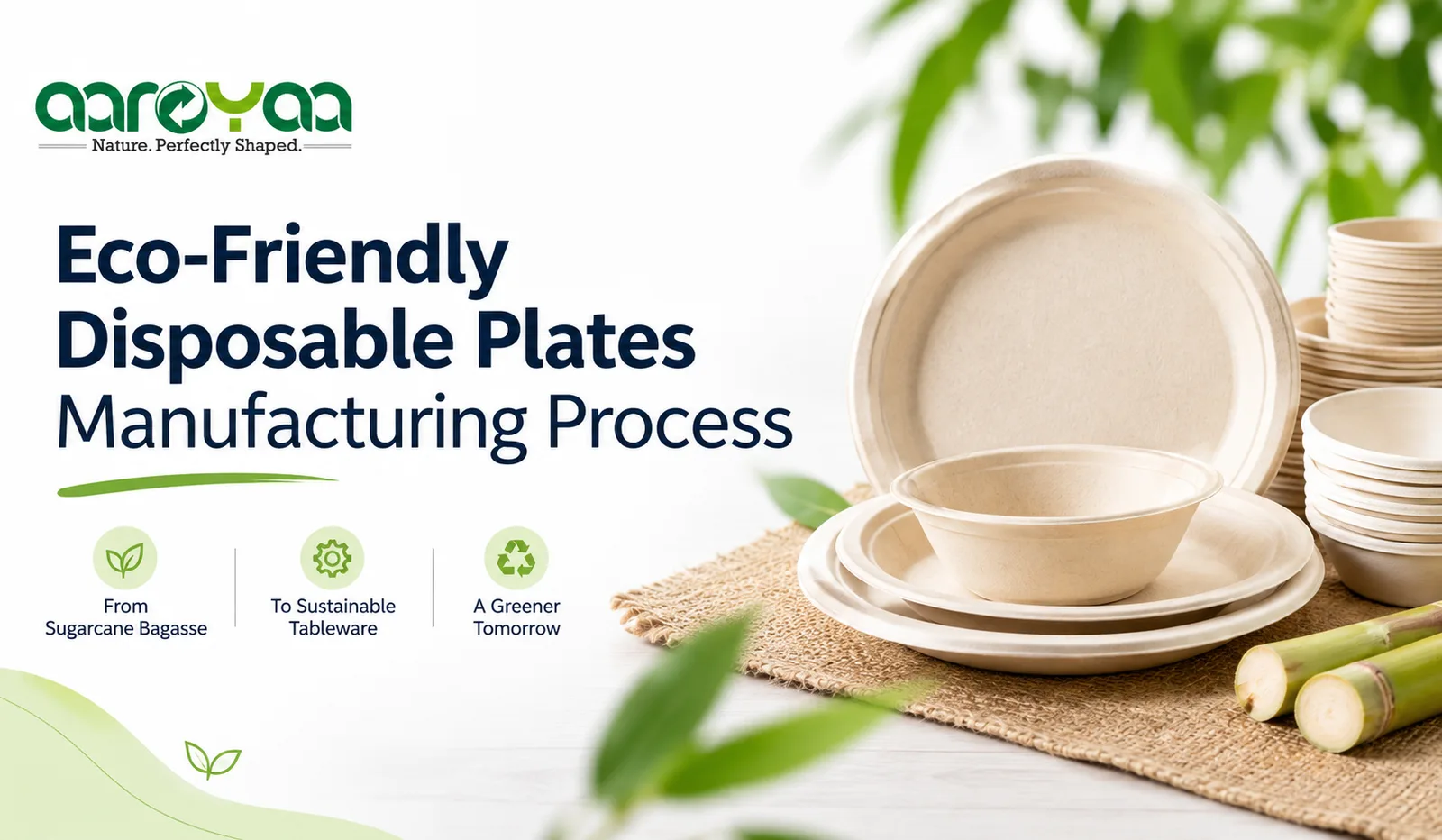
Sugarcane bagasse is the fibrous material remaining after juice is extracted from sugarcane. It can be processed into pulp and formed into products such as dinner plates, snack plates, bowls, and food containers.
Research published in the Journal of Cleaner Production describes the use of sugarcane bagasse pulp in moulded tableware manufacturing and identifies key production stages such as repulping, beating, forming, compression moulding, and hot pressing.
This makes bagasse an example of how an agricultural by-product can be used as a raw material for manufactured products.
Important distinction: A plate made from plant fibres is not automatically certified compostable, biodegradable under every condition, or suitable for every type of food. Those properties depend on the finished product, any coatings or additives, and the evidence supporting its claims.
Step-by-Step Eco-Friendly Disposable Plates Manufacturing Process
The manufacturing process varies according to the factory, equipment, raw material, and product design. The following steps describe a typical process for moulded sugarcane bagasse tableware.
1. Collection and Preparation of Sugarcane Bagasse
The process begins with collecting bagasse from sugarcane processing facilities. The material contains plant fibres that can be used to produce pulp.
Before processing, manufacturers prepare the raw material by removing unsuitable residues and contaminants. Consistent raw-material quality is important because variations in fibre characteristics can affect production efficiency and finished-product performance.
Using an agricultural by-product as a manufacturing input can create an additional use for material generated during sugar production.
2. Pulp Preparation and Repulping
The prepared fibres are mixed with water and processed to form a workable pulp. Repulping helps separate and distribute the fibres so they can be shaped into tableware.
Depending on the production system, manufacturers may also use mechanical refining to adjust fibre characteristics and improve the pulp's forming properties.
The quality of the pulp influences several important characteristics of the finished plate, including surface appearance, thickness, strength, and consistency.
3. Pulp Refinement and Material Preparation
The pulp may undergo further processing to achieve the properties required for the intended product.
Manufacturers must control the fibre mixture and pulp consistency to support reliable moulding. Excessive variation can contribute to defects, uneven surfaces, or inconsistent drying.
Any processing aids, additives, or coatings used should be appropriate for the intended application and assessed against relevant food-contact requirements.
4. Plate Forming and Moulding
Once the pulp is ready, it is introduced into specially designed moulds that determine the plate's shape, depth, size, and design.
Industrial moulding systems use equipment such as forming moulds, vacuum systems, and presses to distribute the fibres and establish the initial product structure.
Different moulds can be used to manufacture dinner plates, snack plates, compartment plates, and bowls.
The forming stage is important because uneven fibre distribution can affect the final product's appearance and strength.
5. Compression Moulding and Hot Pressing
After initial forming, the material may undergo compression moulding and hot pressing. Heat and pressure help consolidate the fibres, remove moisture, and produce a more defined shape.
The operating conditions depend on the raw material, machinery, mould design, and product specifications.
Temperature, pressure, and processing time need to be controlled carefully. Poor process control can result in defects, uneven thickness, deformation, or surface irregularities.
Technical research on moulded bagasse tableware has also examined production challenges associated with fibre fines and deposits during hot pressing, demonstrating why process control is important for consistent manufacturing quality.
6. Drying and Moisture Control
Moisture management is another important stage of disposable plate manufacturing.
Depending on the equipment and production method, moisture may be removed during hot pressing or through additional drying.
Insufficient drying can affect product stability, while unsuitable processing conditions may contribute to warping or other defects.
Manufacturers therefore need to establish appropriate drying conditions and verify that the finished products meet their specifications before packaging.
7. Trimming and Surface Finishing
After forming and drying, excess material may be trimmed from the edges. The plates are then inspected for visible defects and dimensional consistency.
Common inspection points include:
- Uneven edges or incomplete forming
- Cracks, deformation, or surface defects
- Inconsistent thickness or shape
- Excess material or rough finishing
- Product dimensions and overall appearance
The specific checks depend on the manufacturing process and the requirements of the finished product.
8. Quality Testing and Food-Contact Suitability
A finished plate should be assessed for its intended use rather than judged by appearance alone.
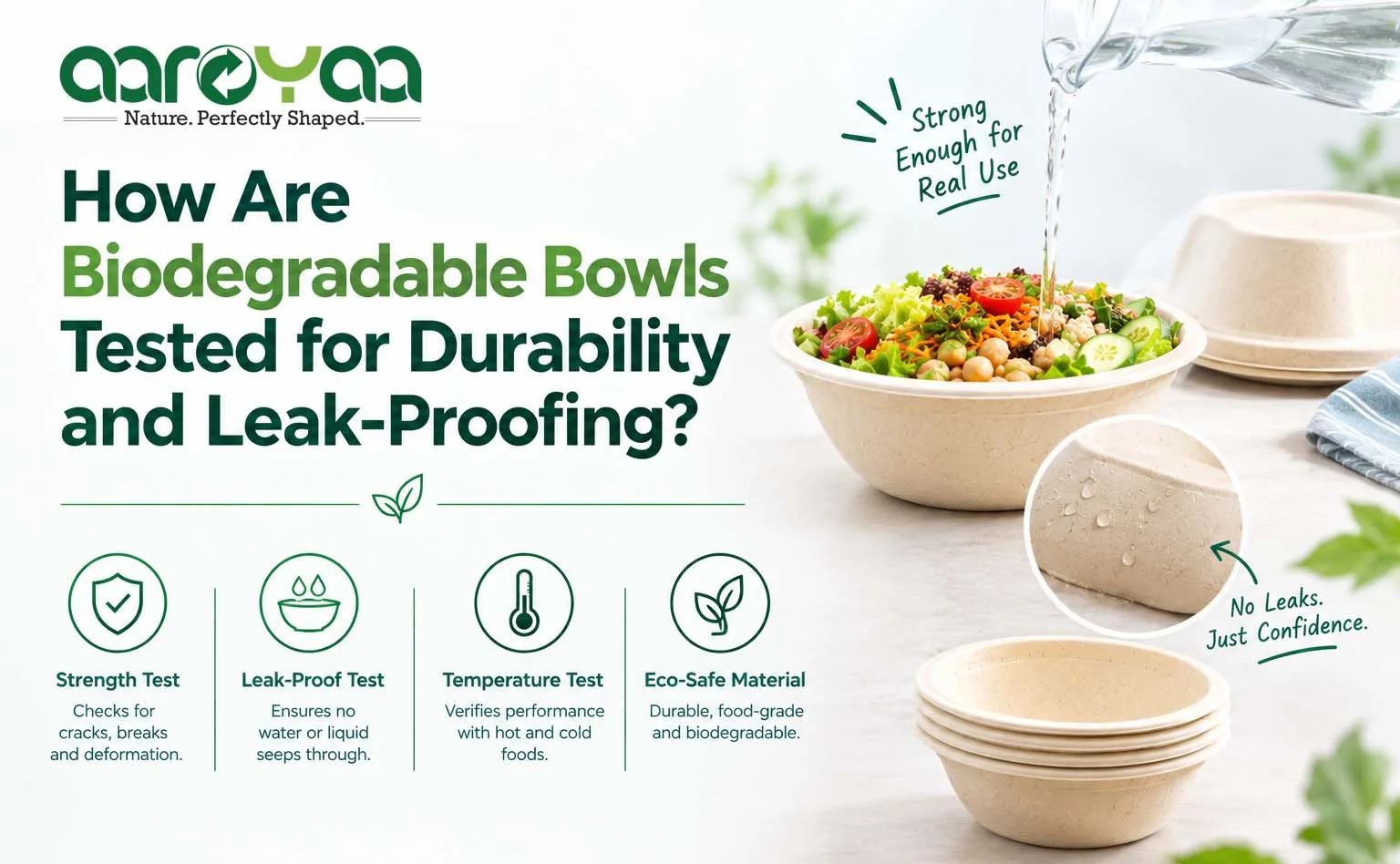
Quality assurance may include evaluating strength, resistance to moisture and food oils, dimensional consistency, and performance under the conditions specified by the manufacturer.
Food-contact suitability is particularly important. In India, the Food Safety and Standards Authority of India (FSSAI) publishes regulations and amendments concerning food packaging and materials.
Manufacturers and suppliers should verify which requirements apply to their particular products and maintain appropriate supporting documentation.
Relevant reference: FSSAI — Food Safety and Standards (Packaging) Regulations.
Buyers should also check product-specific documentation before assuming that every plant-fibre plate is suitable for hot food, oily dishes, or prolonged contact with liquids.
9. Packaging, Storage, and Distribution
Once inspection is complete, the plates are counted and packed to protect them from contamination, moisture, and physical damage.
Appropriate storage conditions help preserve product quality during warehousing and transportation.
Finished products can then be distributed to retailers, wholesalers, caterers, event organisers, food-service businesses, and online customers.
For online shoppers, product descriptions should clearly communicate the material, quantity, dimensions, intended use, and any relevant care or disposal instructions.
What Makes Sugarcane Bagasse Plates Different?
Sugarcane bagasse plates have several characteristics that make them an option for certain food-serving applications.
1. Use of Agricultural Residue
Bagasse is a by-product of sugarcane processing. Using it as a raw material gives this fibrous material an additional application beyond its original role in sugar production.
However, the environmental impact of a finished product also depends on how the material is processed, how much energy and water manufacturing requires, and how the product is disposed of.
2. A Plant-Fibre Alternative to Conventional Plastic Plates
Moulded bagasse plates can replace some conventional plastic tableware applications, depending on the food, temperature, and product design.
The appropriate choice depends on performance requirements rather than material labels alone.
3. Practical for Events and Gatherings
Disposable plates can simplify serving and cleanup at birthdays, weddings, festivals, office events, picnics, and family gatherings.
The correct size, strength, and design should be selected according to the food being served and the number of guests.
4. Multiple Product Formats
Moulded plant-fibre tableware can be produced in different shapes and sizes, including dinner plates, snack plates, bowls, and trays.
This variety allows consumers and food-service businesses to select products that suit different serving needs.
Are Sugarcane Bagasse Plates Biodegradable and Compostable?
This is an important question, and the terms should not be used interchangeably without evidence.
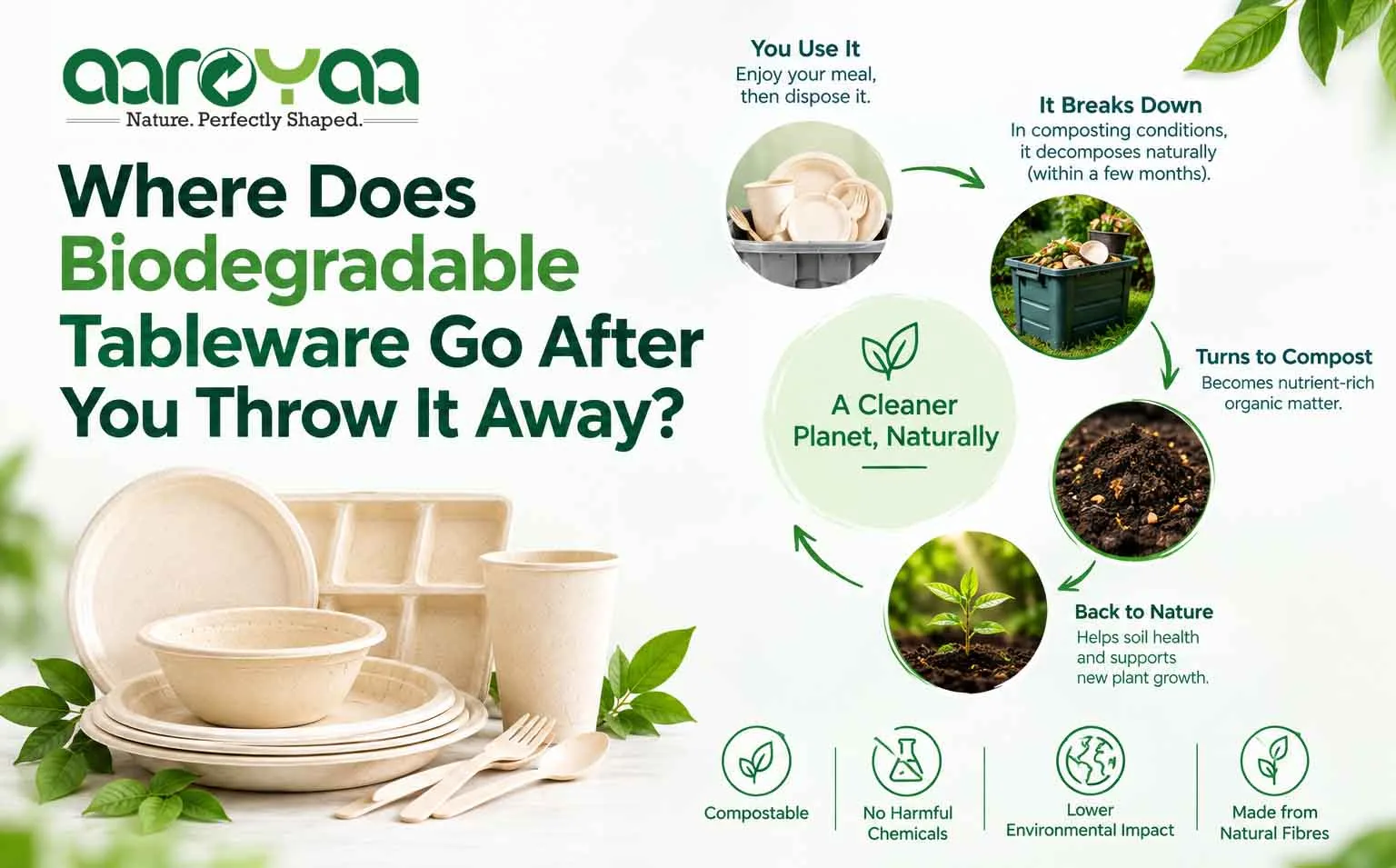
Biodegradable generally describes a material that can be broken down by microorganisms under suitable conditions. The rate and extent of breakdown depend on the material and the environment.
Compostable refers to a material that meets defined requirements for breaking down under specified composting conditions without unacceptable effects on the resulting compost.
A product's performance can depend on its fibre composition, coatings, adhesives, additives, and the composting environment.
The US Environmental Protection Agency explains that composting depends on factors including oxygen, moisture, temperature, and the materials accepted by the composting facility.
Reference: US EPA — Composting.
Consequently, a plant-based plate should not automatically be described as home-compostable or suitable for every composting facility. Buyers should check the manufacturer's evidence and local disposal guidance.
Environmental claims are most trustworthy when they are specific, verifiable, and supported by product-level documentation.
How to Choose Quality Eco-Friendly Disposable Plates
When purchasing disposable plates online or for a business, consider the following factors.
Check the Material
Look for a clear description of the plate's composition. If the product is advertised as sugarcane bagasse tableware, verify that the material information supports the claim.
Evaluate Strength and Intended Use
Consider the types of food you plan to serve. Hot, oily, wet, or heavy foods may require different performance characteristics.
Check the manufacturer's product specifications rather than assuming every disposable plate performs equally well.
Review Food-Contact Information
Look for appropriate information about intended food use, applicable regulatory compliance, and supporting documentation.
Verify Environmental Claims
Claims such as biodegradable, compostable, plastic-free, or home-compostable should be supported by relevant product specifications, test results, or certifications where applicable.
Select the Right Pack Size
Choose a quantity that suits the number of guests and the type of gathering. Smaller packs can be convenient for family celebrations, while larger packs may suit bigger events.
Where Can You Use Eco-Friendly Disposable Plates?
Depending on their specifications, disposable plates can be useful for:
- Birthday parties and house parties
- Weddings and family celebrations
- Diwali, Navratri, and other festive gatherings
- Religious events and community functions
- Corporate events and office celebrations
- Catering services and outdoor gatherings
- Picnics and casual get-togethers
For hosts, choosing the right combination of plates, bowls, and other serving essentials can simplify event preparation and cleanup.
Explore Party Pack Options from Aaroyaa
Planning a celebration involves preparing food, arranging serving essentials, and making guests comfortable. Having the right tableware ready can make the process more convenient.
Aaroyaa offers party pack options for different gathering sizes. Explore the available products to compare pack quantities and choose an option that suits your occasion.
Whether you are organising a small family get-together or a larger celebration, selecting the right pack can help you plan your serving requirements more easily.
Explore Aaroyaa Party Packs:
https://aaroyaa.com/collections/party-pack
Review the product descriptions for current materials, quantities, pricing, and intended-use information before ordering.
Frequently Asked Questions
1. How are eco-friendly disposable plates manufactured?
The process depends on the material. A typical sugarcane bagasse plate manufacturing process includes raw-material preparation, repulping, pulp refinement, forming, compression moulding, hot pressing, drying, trimming, quality inspection, and packaging.
2. What is sugarcane bagasse?
Sugarcane bagasse is the fibrous residue left after juice is extracted from sugarcane. It can be processed into pulp and used to manufacture products such as moulded plates, bowls, and food containers.
3. Are sugarcane bagasse plates suitable for hot food?
Suitability depends on the individual product's specifications and testing. Check the manufacturer's guidance for temperature limits and the types of food the plate is designed to hold.
4. Are biodegradable plates always compostable?
No. Biodegradability and compostability are different claims. Compostability requires performance under defined conditions, and some products may require industrial composting rather than home composting.
5. What quality checks matter when buying disposable plates?
Useful checks include material composition, structural strength, dimensions, resistance to moisture and food oils, food-contact suitability, and evidence supporting environmental claims.
6. Where can I buy eco-friendly party packs online?
You can explore Aaroyaa's available party packs here:
Check the current product listings for pack contents, pricing, and other specifications.
Conclusion
The eco-friendly disposable plates manufacturing process transforms plant-based fibres such as sugarcane bagasse into moulded tableware through stages including pulp preparation, forming, pressing, drying, finishing, and quality inspection.
Understanding these stages helps buyers make better-informed decisions about product performance, food-contact suitability, and environmental claims.
The best choice is not simply a product described as eco-friendly. It is a product whose material, intended use, quality, and disposal guidance are clearly explained and supported by credible information.
For your next celebration, explore Aaroyaa's party packs and choose tableware that fits your gathering and serving requirements.