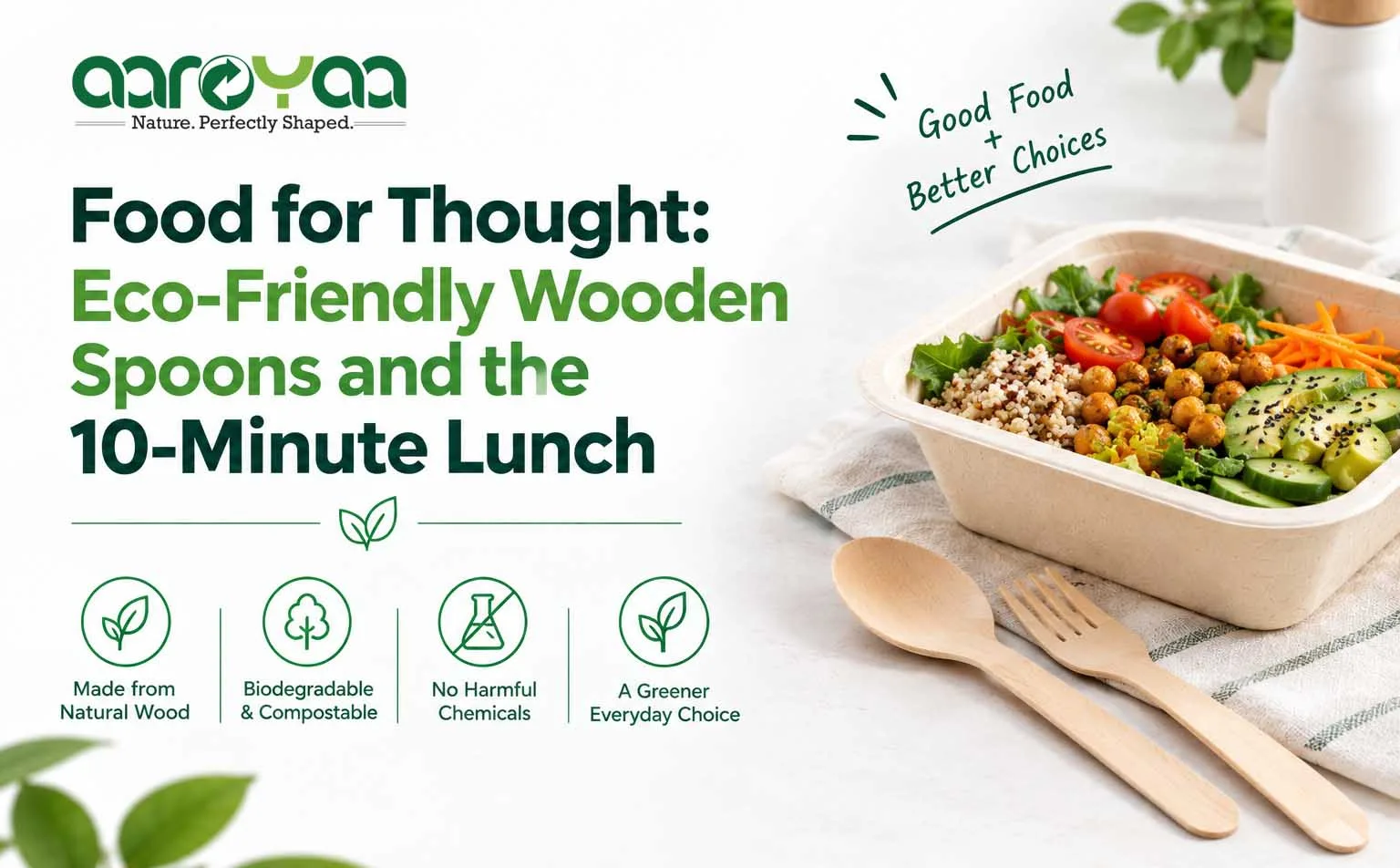
Food for Thought: Eco-Friendly Wooden Spoons and the 10-Minute Lunch
Picture a busy lunch break between meetings. You open the take-out box, finish your rice bowl in ten minutes, and toss the plastic spoon in the trash. With a purchase of Eco-Friendly Wooden Spoons, the considerations begin at the moment of this routine occurrence: How much waste is appropriate to produce for a single meal?
The spoon has done its job. You’re already thinking about the next meeting.
Its story, however, continues long after lunch.
Why Eco-Friendly Wooden Spoons Deserve a Place at the Table
A takeaway spoon is easy to overlook. It arrives with the food, costs little individually, and disappears into a bin without much thought.
That convenience makes it worth examining. We repeatedly use a durable material for a task that may last only minutes.
You may have heard that a plastic spoon takes 400 years to decompose. There is no set timer. It depends on the type of plastic and the conditions it's in when disposed of. NOAA notes that plastics in the environment can break down into smaller and smaller pieces, including microplastics, but they may not completely disappear. Check out the explanation from NOAA.
The exact number is less useful than the underlying question: could we meet this brief need with a more considered choice?
For occasions requiring disposable cutlery, wooden spoons offer an alternative worth exploring.
Start with the Meal You Already Enjoy
Changing cutlery should fit naturally around your food.
Perhaps you’re serving kheer at a family gathering. Packing lunch for an outdoor event. Organising refreshments for an office workshop. These are practical opportunities to choose wooden cutlery before the last-minute shopping begins.
Aaroyaa’s current range includes 140 mm small wooden spoons, 165 mm large wooden spoons, and wooden dessert spoons, with listings showing packs of 100. You can compare them in Aaroyaa’s tableware shop.
Choose according to the food and container. A spoon for a small dessert cup may feel awkward in a deep takeaway bowl. Before buying for a large event, try the selected size with the meal you plan to serve.
Check the grip, edges and ease of scooping. Those everyday details help a thoughtful purchase become a choice you’ll happily repeat.
One Spoon Becomes a Habit
Imagine replacing one conventional plastic spoon at each of five lunches a week.
Over 52 weeks, that would mean 260 fewer plastic spoons used. Across an office of 20 people following the same pattern, the total would reach 5,200.
These are illustrative counts of plastic spoons replaced, assuming one replacement per meal. They show how a small purchasing habit can spread across a workplace or household.
You can start even smaller. Keep suitable cutlery ready before ordering lunch. Ask for unnecessary takeaway cutlery to be left out. For a catered gathering, agree on the cutlery choice while confirming the menu.
Making the decision early helps it survive a busy day.
What Happens After the Last Bite Matters
A wooden spoon takes up resources from nature to be produced and transported. Its environmental impact depends on various details including the origin of the wood, additional finishes and what happens to it after use.
When shopping for Eco-Friendly Wooden Spoons, make sure to get information about composition and disposal instructions. If the product is compostable, double-check whether it is allowed in your local facility.
A replacement of materials alone is not enough for a truly zero-waste kitchen. Getting closer to this standard also implies reducing and avoiding whenever possible, reusing what you already have (when it is safe and hygienic), and separating waste for recycling.
At home or at your workplace, the washable spoon you already possess can become your best friend. In case of a picnic or a takeaway dinner when single-use utensils are required, buy only the necessary quantity, and leave the others unused and dry for the next occasion.
Give Your Next Lunch a Better Ending
There’s no need to turn every meal into an environmental calculation. Choose one routine you can improve and make the preparation simple.
For your next gathering, explore Aaroyaa’s Eco-Friendly Wooden Spoons. Compare sizes, check the product details, and pick the option that suits your food.
When someone asks about the change, share the reason plainly: you wanted to rethink what gets thrown away after a few minutes of use.
Lunch may be over in ten minutes. The choice you make before it arrives can become a habit that lasts.
More stories from Aaroyaa
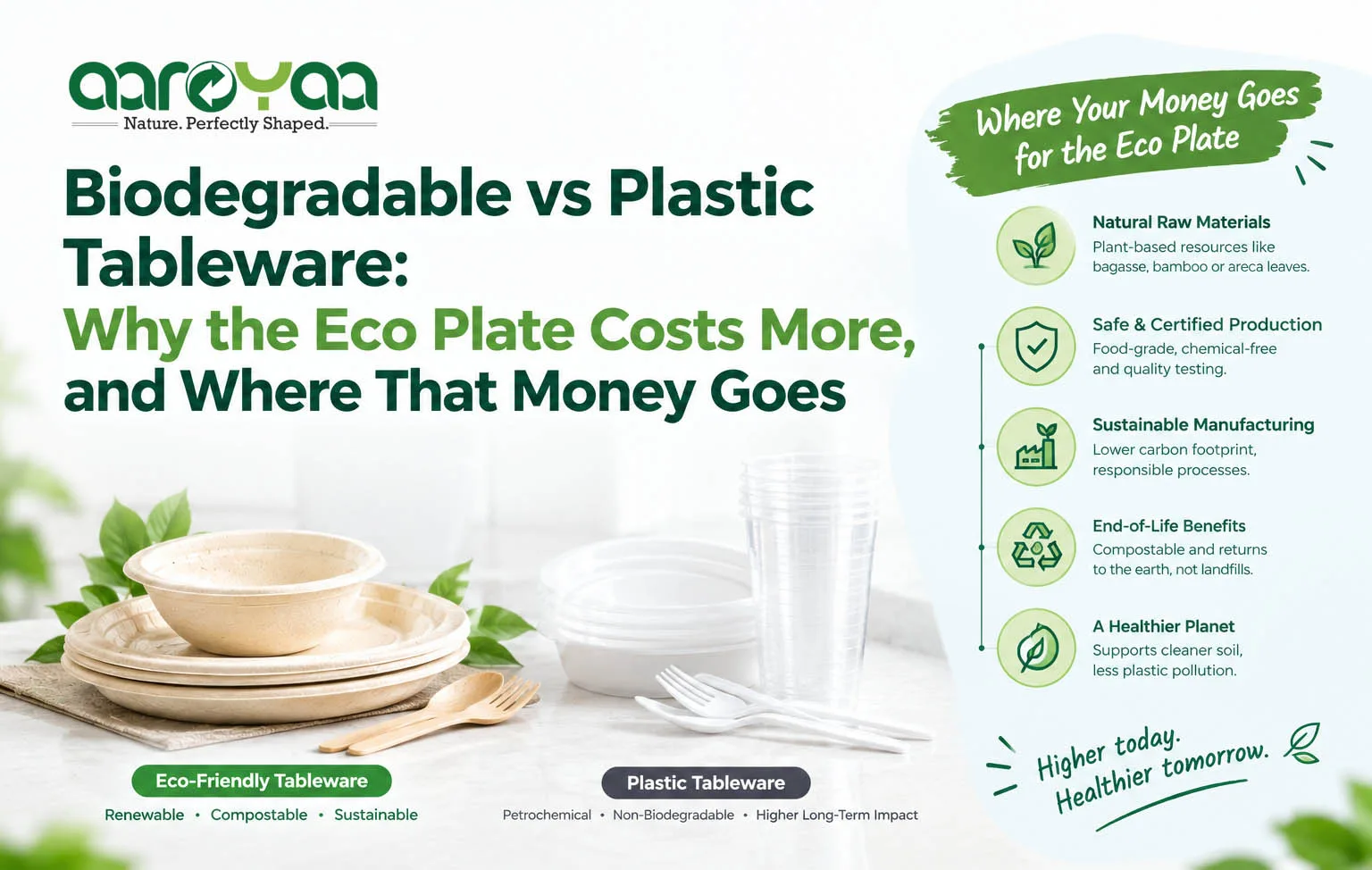
Biodegradable vs Plastic Tableware: Why the Eco Plate Costs More, and Where That Money Goes
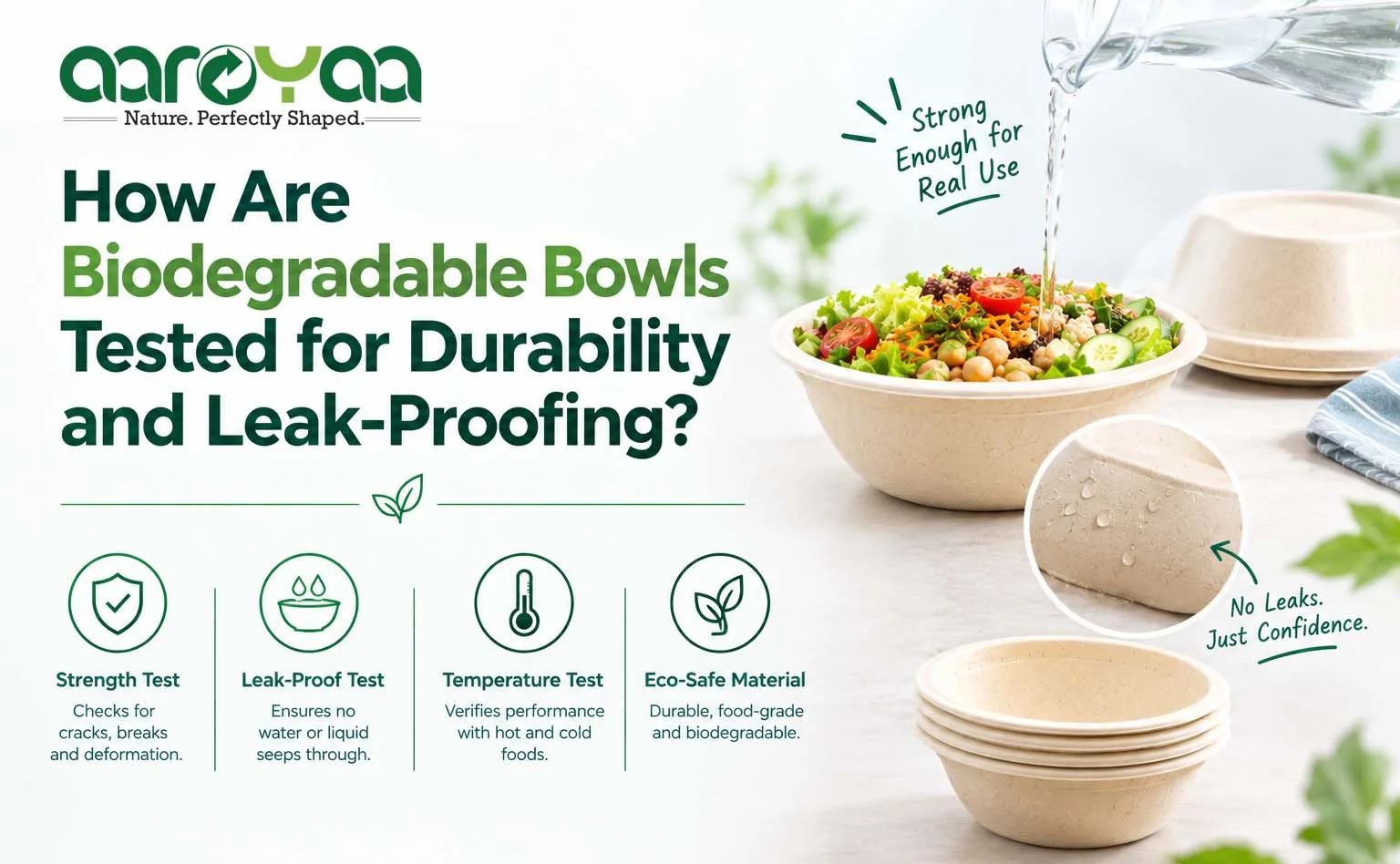
How Are Biodegradable Bowls Tested for Durability and Leak-Proofing?