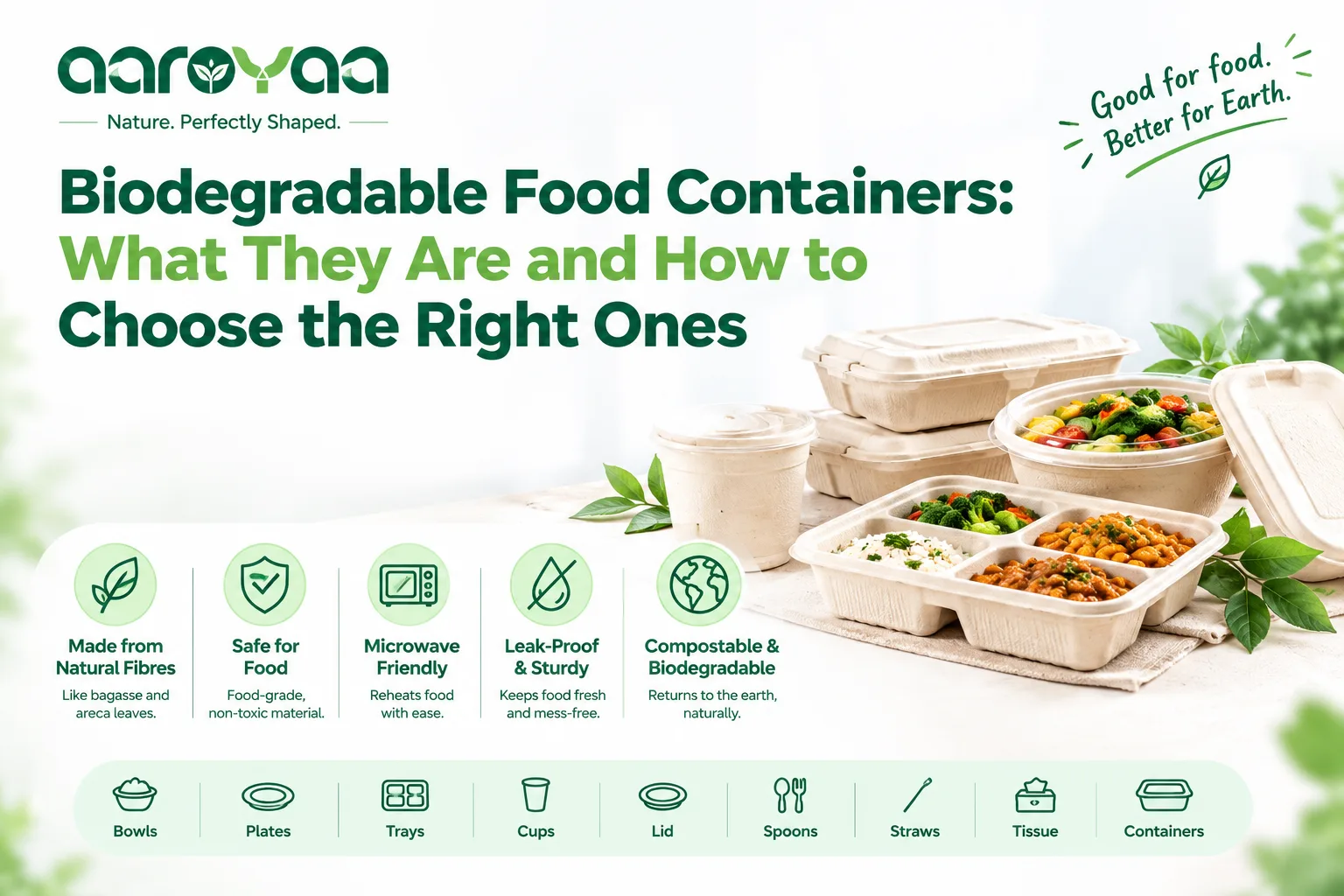
Biodegradable Food Containers: What They Are and How to Choose the Right Ones
Plastic and foam packaging have long been the default for takeaway and delivery food. They are cheap and convenient, but they leave behind waste that can take decades to break down. As customers and regulations push for greener choices, biodegradable food containers are becoming a practical alternative for restaurants, cafés, cloud kitchens and home users.
This guide explains what biodegradable food containers are, what they are made from, their benefits, and what to look for before you buy.
What Are Biodegradable Food Containers?
Biodegradable food containers are made from natural materials that microorganisms can break down into water, carbon dioxide and organic matter. Plastic stays in the environment for a very long time, while these containers return to the earth much faster, especially in composting conditions.
The terms "biodegradable" and "compostable" are often used interchangeably, but they are not identical. Biodegradable means a material breaks down naturally over time. Compostable means it breaks down into usable compost under the right conditions. When choosing packaging, look for products that clearly state how they are meant to be disposed of.
Why Sugarcane Bagasse Is a Popular Material
One of the most widely used materials for biodegradable food containers is bagasse, the fibrous pulp left over after sugarcane juice is extracted. Instead of being burned or discarded as agricultural waste, it is moulded into plates, bowls, containers and lids.
Bagasse has several practical advantages:
- Sturdy and lightweight: it holds its shape with both hot and cold food.
- Food-safe: food-grade bagasse is suitable for direct contact with meals.
- Microwave-friendly: good bagasse products can be reheated without the warping common with some plastics.
- Made from waste: it gives a by-product of the sugar industry a second use.
Key Benefits of Biodegradable Food Containers
1. Less plastic waste. Every plastic container replaced means less waste in landfills, drains and waterways.
2. Better brand image. Many customers now prefer businesses that use sustainable packaging, and eco-friendly packaging shows you care about more than the food.
3. Suitable for many foods. From curries and salads to desserts and meal-prep boxes, the right size and shape works for most menus.
4. Easier compliance. With restrictions on single-use plastics tightening in many places, switching early helps businesses avoid disruption later.
Don't Forget the Lid
A container is only as good as its closure. A poorly fitting lid leads to spills, lost freshness and unhappy customers, which matters most for delivery orders that travel across the city.
Compostable lids made from bagasse are designed to fit matching containers securely, helping keep food fresh and reducing leaks in transit. If you are building a complete eco-friendly packaging setup, browse Aaroyaa's compostable bagasse container lids, which come in square and oval shapes and in sizes from 500 ml to 1000 ml.
How to Choose the Right Biodegradable Food Containers
Before ordering, check these points:
- Size and capacity: match the container to your portions. Common sizes are 500 ml, 750 ml and 1000 ml.
- Shape: square containers stack and store neatly, while oval ones suit gravies and rice dishes.
- Heat and leak resistance: confirm the product handles hot, oily or liquid foods.
- Lid compatibility: make sure the lid is designed for your container size and shape.
- Material certification: look for clear labelling that the product is food-grade and compostable.
- Price per unit: compare cost per piece, not just pack price, especially if you order regularly.
You can explore the full range of plates, bowls and containers in the Aaroyaa shop to compare sizes and options side by side.
Tips for Using and Disposing of Biodegradable Containers
- Store them dry. Moisture can weaken fibre-based packaging, so keep stock in a cool, dry place.
- Use them as intended. Check the manufacturer's guidance on temperature limits and reheating.
- Dispose of them properly. Food-soiled bagasse containers can go into a compost bin where facilities exist, which is where they perform best.
- Separate waste streams. Keep compostable apart from plastic and general waste so they reach the right place.
Buying in Bulk for Your Business
For restaurants, caterers and cloud kitchens, ordering in bulk usually lowers the cost per unit and keeps supply steady. Some suppliers also offer custom printing so your logo appears on the packaging. If you run a food business, Aaroyaa's bulk order options are worth looking into.
Final Thoughts
Biodegradable food containers are a practical step towards cutting plastic waste without compromising on convenience or food quality. Made from renewable materials like sugarcane bagasse, they work for everyday meals, takeaway and large catering orders. Choose the right size, pair it with a well-fitting lid, and dispose of it responsibly. The result is packaging that serves your customers and the environment.
More stories from Aaroyaa
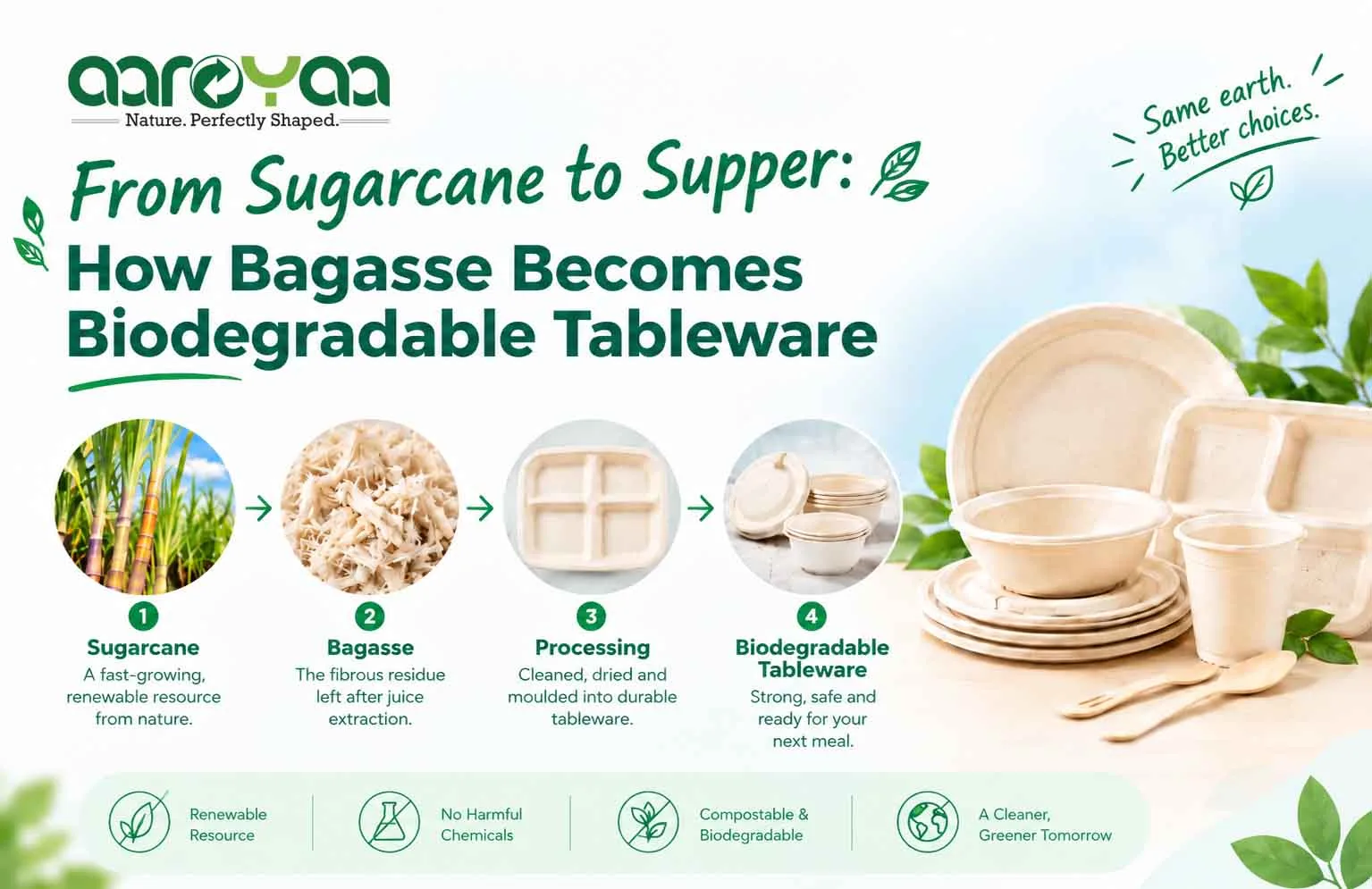
From Sugarcane to Supper: How Bagasse Becomes Biodegradable Tableware
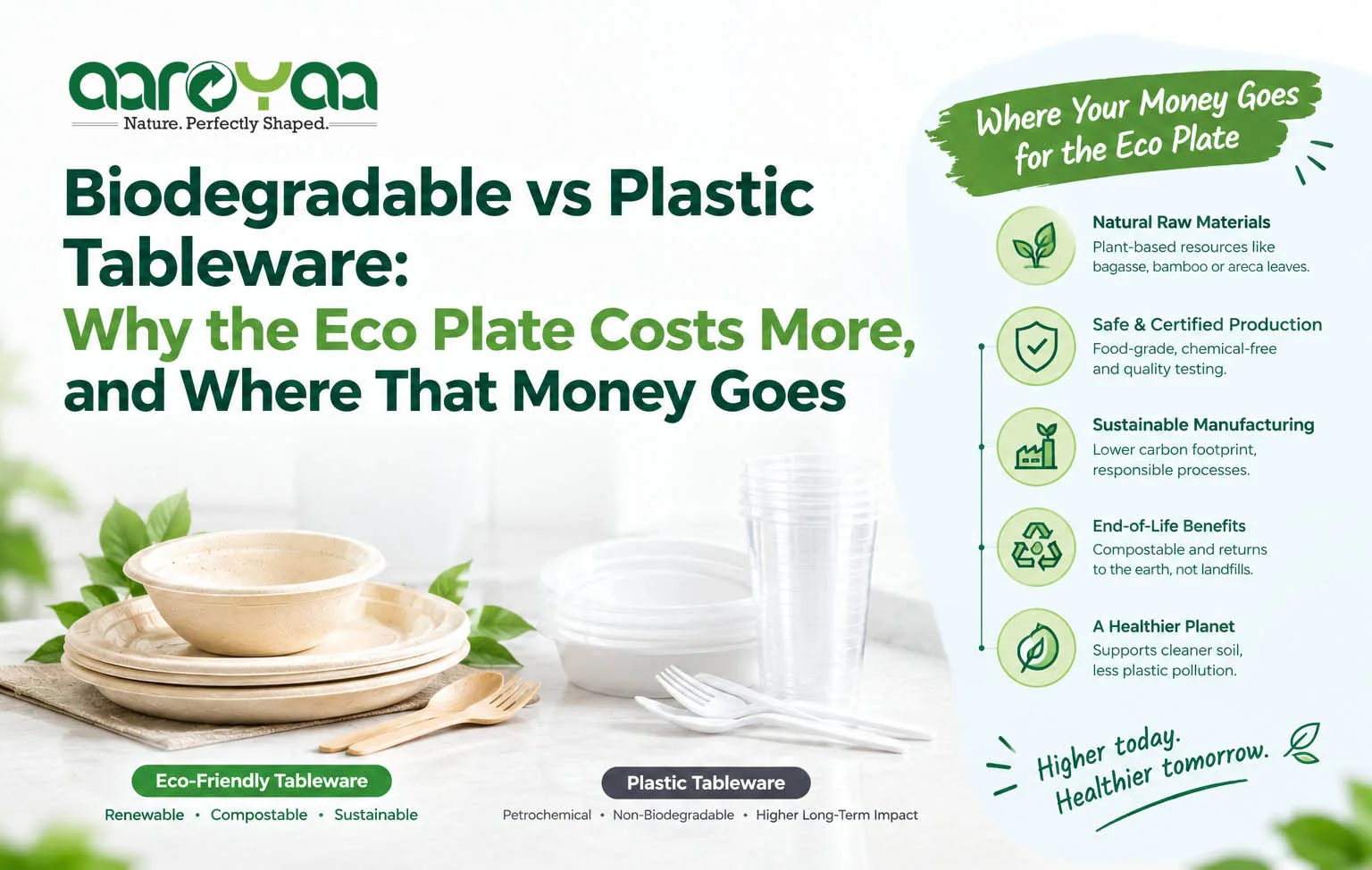
Biodegradable vs Plastic Tableware: Why the Eco Plate Costs More, and Where That Money Goes