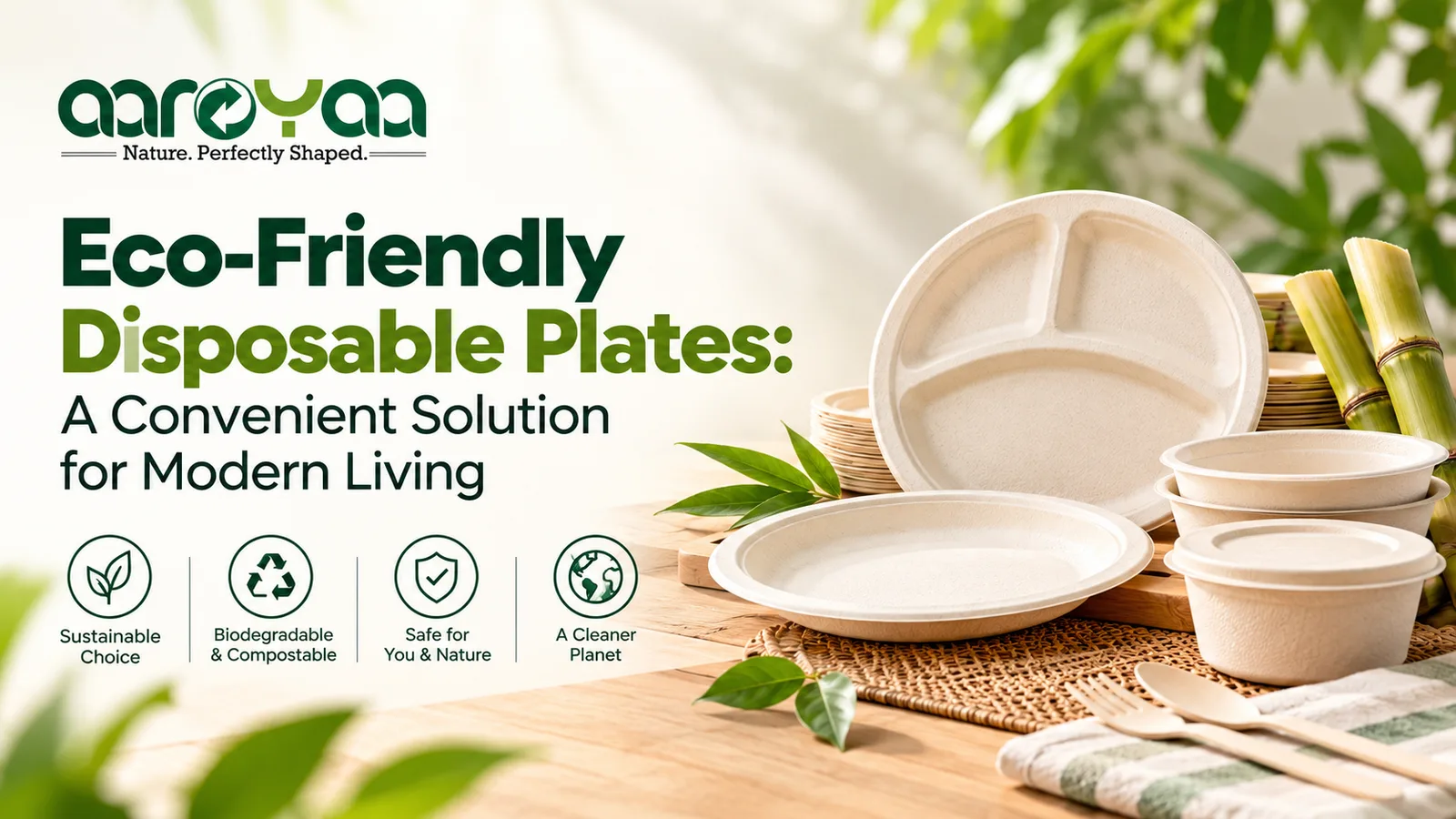
Eco-Friendly Disposable Plates: A Convenient Solution for Modern Living
Introduction
Every year, Indian households and event organizers generate massive amounts of single-use plastic waste — and disposable plates are one of the biggest contributors. Having worked closely with sustainable tableware for years, we at Aaroyaa have seen a clear pattern: people don't want to give up the convenience of disposable plates, but they do want an alternative that doesn't harm the planet. That's exactly the gap eco-friendly disposable plates fill.
In this blog, we'll walk you through what eco-friendly disposable plates actually are, why they matter, how to choose the right ones, and why they're becoming the go-to choice for modern homes, offices, and events across India.
What Are Eco-Friendly Disposable Plates?
Unlike traditional plastic or thermocol plates, eco-friendly disposable plates are made from natural, biodegradable, or compostable materials such as:
• Bagasse (sugarcane fiber) – a byproduct of sugar production, sturdy and leak-resistant
• Areca palm leaf – made from naturally fallen leaf sheaths, requiring no trees to be cut
• Bamboo and wood pulp – strong, biodegradable, and often microwave-safe
• Recycled or plantable paper – lightweight and fully compostable
These materials break down naturally within weeks to a few months, unlike plastic, which can take hundreds of years to decompose.
Why Eco-Friendly Disposable Plates Matter Today
From our experience supplying tableware for everything from small family gatherings to large catering events, here's what we consistently see driving the shift:
1. Environmental Responsibility
Plastic and thermocol plates contribute heavily to landfill waste and microplastic pollution. Several Indian states have already restricted single-use plastic cutlery and plates under the Plastic Waste Management Rules, pushing both households and businesses toward compostable alternatives.
2. Hygiene Without Compromise
Disposable plates remain one of the most hygienic options for large gatherings — no cross-contamination, no washing required, and safe for one-time use. Eco-friendly variants offer the same hygiene benefits without the environmental cost.
3. Durability That Matches Convenience
A common myth is that eco-friendly plates are flimsy. In reality, bagasse and areca leaf plates are often sturdier than thin plastic ones — they're leak-proof, oil-resistant, and can hold hot food without warping.
4. Microwave and Oven Safe
Many natural-fiber plates can go straight into the microwave, making them practical for everyday home use, not just parties.
Where Eco-Friendly Disposable Plates Are Used
• Home dining – quick meals, kids' lunches, guests
• Parties and celebrations – birthdays, weddings, festivals
• Corporate events and catering – bulk usage with minimal cleanup
• Religious and community gatherings – langars, prasad distribution, community feasts
• Food delivery and takeaway packaging – restaurants shifting to sustainable serving ware
How to Choose the Right Disposable Plates
When selecting eco-friendly disposable plates, keep these factors in mind:
• Material – look for bagasse, areca leaf, or bamboo for compostability
• Size and shape – round, square, or compartment trays depending on the meal type
• Heat resistance – check for “microwave-safe” or “oven-safe” labels
• Leak resistance – important for gravies, curries, and liquids
• Certification – look for compostability or biodegradability certifications
• Pack size – bulk packs work better for events; smaller packs for daily home use
Aaroyaa's Approach to Sustainable Tableware
At Aaroyaa, our disposable plate range is built around one core idea: sustainability shouldn't mean sacrificing quality or convenience. Our collection includes options like bagasse-based compartment meal trays and other natural-fiber plates designed to be sturdy, leak-resistant, and safe for everyday and event use — while remaining compostable after disposal.
We work directly in this space, which means our recommendations aren't just theoretical — they come from real usage feedback across households, caterers, and event planners who rely on these products regularly.
Tips for Responsible Disposal
Even eco-friendly plates need proper disposal to maximize their benefit:
• Compost when possible – bagasse and leaf plates break down well in home or industrial composting setups
• Avoid mixing with plastic waste – keep compostable waste separate for effective processing
• Wipe off excess food before disposal to speed up decomposition
• Check local waste guidelines, as composting infrastructure varies by city
Conclusion
Eco-friendly disposable plates strike the balance modern life demands — convenience without compromise, and hygiene without harming the environment. Whether you're hosting a family dinner, planning a wedding, or running a catering business, switching to sustainable disposable tableware is a small change with a meaningful impact.
Explore Aaroyaa's range of eco-friendly disposable plates and take a practical step toward greener, cleaner living — one meal at a time.
More stories from Aaroyaa
The Math of Your Kitchen Roll: Why Switching to Eco-Friendly Tissue Adds Up
Made in India, Made for Earth: Eco-Friendly Paper Straws and Our Greener Independence