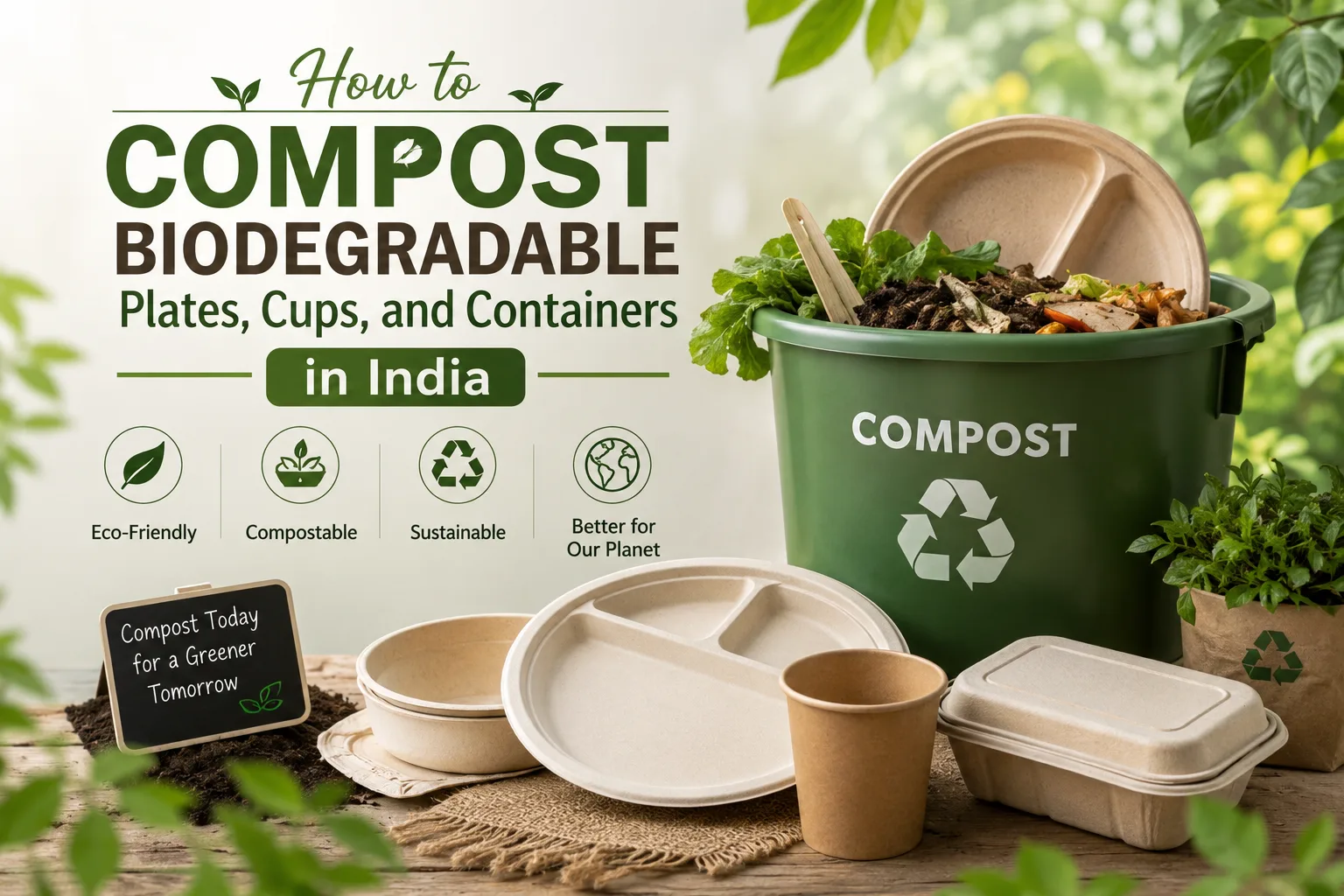
How to Compost Biodegradable Plates, Cups, and Containers in India
India is moving quickly toward sustainable dining and food packaging. Restaurants, cafes, caterers, cloud kitchens, and even households are replacing plastic disposables with compostable dinnerware and biodegradable plates. Stricter plastic waste rules, growing customer awareness, and pressure to cut landfill waste have pushed this change forward.
Many buyers now choose compostable containers made from bagasse, areca leaf, bamboo fiber, kraft paper, or molded pulp because they feel cleaner and more eco-friendly than plastic. But disposal still causes confusion after use. A compostable plate only supports sustainability when it is thrown away the right way.
Many people assume biodegradable products break down anywhere, but that is not always true. Some materials compost easily at home, while others only decompose properly in industrial composting facilities where heat, moisture, and waste conditions are managed carefully. Restaurants, caterers, and businesses using large volumes of disposable packaging also need dependable waste handling systems. Otherwise, food scraps and mixed garbage can contaminate compostable materials and increase disposal costs.
Brands such as Aaroyaa have helped raise awareness of eco-friendly food packaging in India. Hospitality businesses and bulk buyers frequently search for practical alternatives that reduce plastic use without disrupting daily operations.
This guide explains how to compost biodegradable plates, cups, and containers in India. It also covers which materials compost best, common disposal mistakes, and what restaurants or event businesses should check before buying compostable packaging.
Why Compostable Dinnerware Is Growing Fast in India
Demand for compostable dinnerware keeps rising across India as consumers and businesses look for practical alternatives to plastic. Government rules have also pushed many companies to adopt compostable products more broadly in day-to-day operations.
India’s biodegradable packaging market reached USD 3.7 billion in 2025 and is expected to keep expanding over the next decade (IMARC Group). At the same time, the compostable foodservice packaging market is projected to almost double by 2031, showing how fast interest in these products is growing across the industry (Mobility Foresights).

Source: IMARC Group and Mobility Foresights
A big portion of this demand comes from foodservice businesses because takeaway and delivery services use huge amounts of packaging every day. According to Towards Packaging, foodservice applications made up nearly 50% of India’s biodegradable tableware market in 2025 (Towards Packaging).
Cloud kitchens and catering companies are also switching to compostable containers to cut dependence on banned plastics while supporting sustainability goals. Hotels and event planners are making similar decisions. Weddings, corporate events, and outdoor gatherings still rely heavily on disposable tableware, so biodegradable plates and compostable cups are appearing more frequently.
Still, purchasing compostable products by itself is not enough. Proper composting systems and responsible disposal methods are necessary so these materials can break down the way they are supposed to.
Understanding Which Materials Actually Compost
Biodegradable plates and compostable containers don’t break down the same way after disposal. Some materials decompose naturally in home compost setups, while others require the controlled heat and processing available only at industrial composting facilities. That distinction matters.
The easiest materials to compost in Indian conditions include:
- Bagasse or sugarcane fiber
- Areca leaf plates
- Bamboo fiber products
- Uncoated kraft paper
- Molded pulp trays and bowls
Most of these plant-based products break down within 60 to 120 days when composted properly. In the right conditions, they decompose fairly fast.
PLA-lined cups and some certified compostable plastics behave differently because they need much higher temperatures, generally above 50 to 58°C, to break down correctly. Research supported by UNEP and shared through Operation Shuddhi, along with a peer-reviewed PMC study, points to the same problem: India still has limited industrial composting infrastructure (Operation Shuddhi) (PMC).
That creates challenges for businesses using compostable cups or plastic-style food containers. If those products end up in landfills instead of proper composting systems, decomposition becomes much slower and may sometimes take years.
Restaurants and procurement teams should also check whether products carry CPCB certification under IS/ISO 17088 standards. In India, only certified compostable materials can legally claim compostability.
Terms like ‘oxo-biodegradable’ and unclear green labels still confuse many buyers. India banned oxo-degradable plastics because they break into microplastics instead of composting fully.
Composting Methods for Homes and Businesses
Composting methods for homes and businesses differ based on the product type and how much waste a home or business produces, sometimes quite a bit.
Home Composting for Families and Small Events
Families can compost bagasse plates, areca bowls and paper containers at home with very little work. A few simple steps help them break down the right way.
- Remove stickers, tape or plastic coatings before adding them to compost.
- Tear plates and containers into smaller pieces so they break down faster.
- Mix them with wet kitchen scraps like vegetable peels or leftover food.
- Add dry material such as leaves or newspaper to control extra moisture in the pile.
- Turn the compost every few days so air can move through it properly.
- Keep the compost damp, not too wet, since excess water can slow decomposition.
In many parts of India, warm weather helps compost break down faster than in colder areas. People living in apartments, on balconies or in smaller homes commonly use compact compost bins for daily food scraps and biodegradable plates.
Composting for Restaurants and Caterers
Large food businesses generally need a more organized setup. A cafe or cloud kitchen using 3,000 to 5,000 disposable items every day can quickly create a large amount of packaging waste.
According to Pakka, compostable tableware may cost about 10% to 20% more than regular paper products. At the same time, EPR-related fees tied to non-compostable packaging can raise overall costs (Pakka).
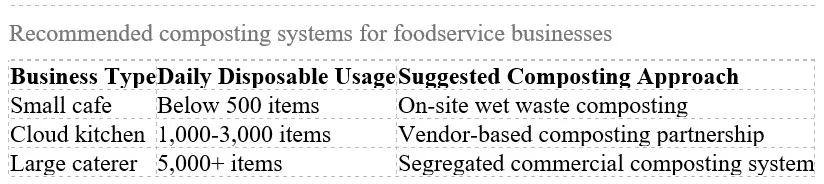
Restaurant teams should keep compostable waste separate from recyclable plastics and normal trash. When different waste streams get mixed together, contamination goes up and composting becomes much harder.
Clear disposal signs are also important. They help customers and staff sort waste correctly without having to guess where items belong.
Common Composting Mistakes That Slow Decomposition
Many businesses switch to biodegradable plates expecting fast environmental benefits, but the results can be slower than expected. Poor disposal habits may reduce the impact more than most people realise, even when the packaging is designed to break down over time.
A common mistake is assuming every compostable container will naturally decompose in an open landfill. That rarely happens. Most landfill sites do not have the oxygen levels and microbial activity needed for proper composting, so even biodegradable packaging can stay there much longer than expected.
Problems also happen when food packaging gets mixed with regular plastic waste. Compostable cups paired with plastic lids, sachets, or PET bottles may be rejected by composting systems, and the waste ends up back in landfills.
Some companies buy uncertified products without checking suppliers carefully. Greenwashing continues to grow in India, and some sellers advertise products as biodegradable even though they do not have CPCB certification.
PLA products can also create issues in places without industrial composting facilities. For rural event planners, areca or bagasse products may be a better choice because those materials compost more easily in natural conditions.
Consumer awareness is growing, but confusion around disposal remains high. According to the India Plastics Pact, 69% of Indian consumers purchased biodegradable food containers and cutlery, showing wider adoption across homes and businesses (India Plastics Pact).
Adoption alone is not enough. Businesses and consumers still need clearer guidance on how to dispose of compostable products properly.
Regulations and Trends Shaping Compostable Packaging
India’s single-use plastic ban has pushed foodservice businesses to adopt compostable dinnerware at a much faster pace. Hotels, QSRs, and event companies are under growing pressure to switch to sustainable packaging, and this change is becoming more noticeable across the industry.
The Plastic Waste Management Rules now place greater focus on:
- EPR compliance
- Certified compostable materials
- Digital traceability
- Waste accountability
Before choosing suppliers, procurement teams now review certifications, material sourcing, and disposal systems more carefully. Supplier screening has become a normal part of purchasing decisions.
Grand View Research reported that the foodservice sector accounted for more than 41% of global eco-friendly food packaging revenue in 2024. Much of that demand came from delivery services, cafes, and quick-service restaurants looking for practical alternatives to traditional packaging (Grand View Research).
Across India, bamboo-based packaging and molded fiber products are seeing strong growth. These materials compost efficiently and work well with hot food, making them attractive for restaurants and catering businesses.
Buyers are also moving toward PFAS-free food packaging. Many now prefer compostable containers that avoid harmful chemical coatings and support safer disposal practices.
Institutional buyers commonly ask suppliers for:
- CPCB-certified products
- Compostability test reports
- Food-grade compliance
- Supply chain transparency
- Bulk packaging support
For hospitality procurement teams, these are now widely viewed as standard purchasing requirements instead of optional checks.
Building a Practical Composting System for Your Business
Businesses that use compostable dinnerware on a regular basis need a waste system that works in day-to-day operations, instead of trying to fix composting problems later.
Keep things simple at the start. Choose materials that are easier to handle from the beginning. In India, bagasse and areca products generally create fewer problems than packaging with high PLA content.
Staff training matters too. Kitchen teams and housekeeping workers need clear instructions for separating waste, or the setup can get messy quickly. Separate bins should be used for:
- Wet food waste
- Compostable packaging
- Recyclables
- General waste
Many restaurants now partner with local composting vendors or municipal wet-waste processors to handle a large part of the work, especially in metro cities. Food delivery runs throughout the week, so the demand for organized waste processing keeps growing.
Before placing wholesale orders, procurement teams should check compostability certifications along with the material information suppliers provide. Proper documentation helps later when waste gets collected, sorted, or inspected.
Companies that manage disposal carefully can see long-term advantages:
- Better ESG reporting
- Lower plastic-related compliance risks
- Improved customer perception
- Cleaner waste management systems
- Reduced contamination penalties
Cleanup after large events becomes easier as well. Event planners and wedding caterers regularly find that compostable plates and compostable containers help keep waste handling organized once the event is over.
Making Composting Part of Everyday Food Service
Compostable dinnerware is no longer a small niche in India. Foodservice brands, hospitality teams, and eco-conscious households now use it as part of their regular daily operations. At this stage, it has become fairly common across many settings.
The environmental benefits still depend a lot on what happens after use. Bagasse plates, areca bowls, compostable containers, and biodegradable cups perform best when waste is sorted properly and composted under suitable conditions. Without proper handling, the environmental value can drop quickly.
For businesses, composting goes beyond simply meeting compliance requirements. Cleaner operations matter, and dependable waste systems can support sustainability reporting while helping build customer trust over time. This is especially important for restaurants, caterers, event planners, and cloud kitchens dealing with changing regulations and rising customer expectations.
India’s compostable packaging market continues to expand. Buyers should pay closer attention to certified materials, practical composting methods, and long-term waste management plans instead of treating disposal as an afterthought. Even small operational changes can make a real difference when applied across thousands of food orders and large events each day.
Frequently Asked Questions
Common questions related to this article.
Can biodegradable plates be composted at home in India?
Yes, many biodegradable plates made from bagasse, areca leaf, bamboo fiber, or uncoated paper can compost at home. They break down faster when cut into smaller pieces and mixed with wet kitchen waste.
Do compostable cups need industrial composting?
Some do. PLA-lined compostable cups usually need higher temperatures found in industrial composting facilities. Regular home composting may not fully break them down.
How can restaurants manage compostable packaging waste?
Restaurants should separate compostable waste from plastic and recyclable materials. Many food businesses also partner with wet-waste processors or composting vendors to handle large packaging volumes efficiently.
Are all biodegradable plates legally compostable in India?
No. Compostable products sold in India should comply with IS/ISO 17088 standards and carry CPCB certification. Buyers should verify certifications before bulk procurement.
Which compostable dinnerware materials work best in Indian conditions?
Bagasse and areca leaf products are among the most practical options because they decompose relatively well in Indian climate conditions. Many businesses sourcing products from companies like Aaroyaa prefer these materials for foodservice use due to their durability and easier compostability.
Why are compostable containers becoming popular with cloud kitchens?
Cloud kitchens face increasing pressure to reduce plastic waste and improve sustainability practices. Compostable containers also help support compliance goals and improve brand image with eco-conscious customers.