The Math of Your Kitchen Roll: Why Switching to Eco-Friendly Tissue Adds Up
A splash of tea on the counter. Sticky fingers after breakfast. A quick wipe before guests arrive. Your tissue box quietly gets through the day with you, one pull at a time.
Then it’s empty. Again.
Choosing Eco-Friendly Tissue starts with noticing that familiar cycle. Something you buy without much thought can become a recurring decision about the materials your household uses. And when you count those purchases over a year—or several decades—the humble tissue box deserves a second look.
Eco-Friendly Tissue: Start with Your Family’s Numbers
There is no single tissue-use figure that fits every family. Guest visits, household size and everyday habits all change how quickly a pack disappears.
So let’s use a simple example: a household finishing one 50-pull tissue pack each week.
Over 52 weeks, that means:
● 52 packs a year
● 2,600 tissue pulls a year
● 1,560 packs over 30 years
● 78,000 pulls across those three decades
That is an illustration, not an estimate of the average family. A household using two identical packs weekly would double those numbers.
Kitchen rolls and tissue boxes have different sheet sizes and counts, so compare like with like. Write the opening date on your next pack and see how long it lasts. You’ll have a useful starting point based on your own kitchen.
The surprising part is how much purchasing happens on autopilot. Change the product you regularly replenish, and that decision can carry through hundreds of future purchases.
What Changes When You Choose Bamboo or Recycled Tissue?
The main difference begins with the fibre.
Bamboo offers an alternative source to virgin wood fibre. The International Bamboo and Rattan Organisation explains that bamboo can regenerate after harvesting, making it a renewable raw material when appropriately managed. Read INBAR’s explanation.
Recycled-content tissue takes another route, using recovered paper fibre. Look for the stated recycled percentage; products can contain a mixture of recovered and virgin fibre. The EPA’s paper guidance distinguishes these fibre sources when assessing tissue products.
Both approaches give you something concrete to examine beyond the word “green.” Check what the tissue contains, how it performs and what sourcing information the supplier provides.
The pack count alone cannot tell you how many trees, litres of water or kilograms of emissions a switch saves. Those figures require product-specific evidence. What your household calculation does reveal is the scale of the material choice you keep making.
Where Aaroyaa Fits into the Everyday Routine
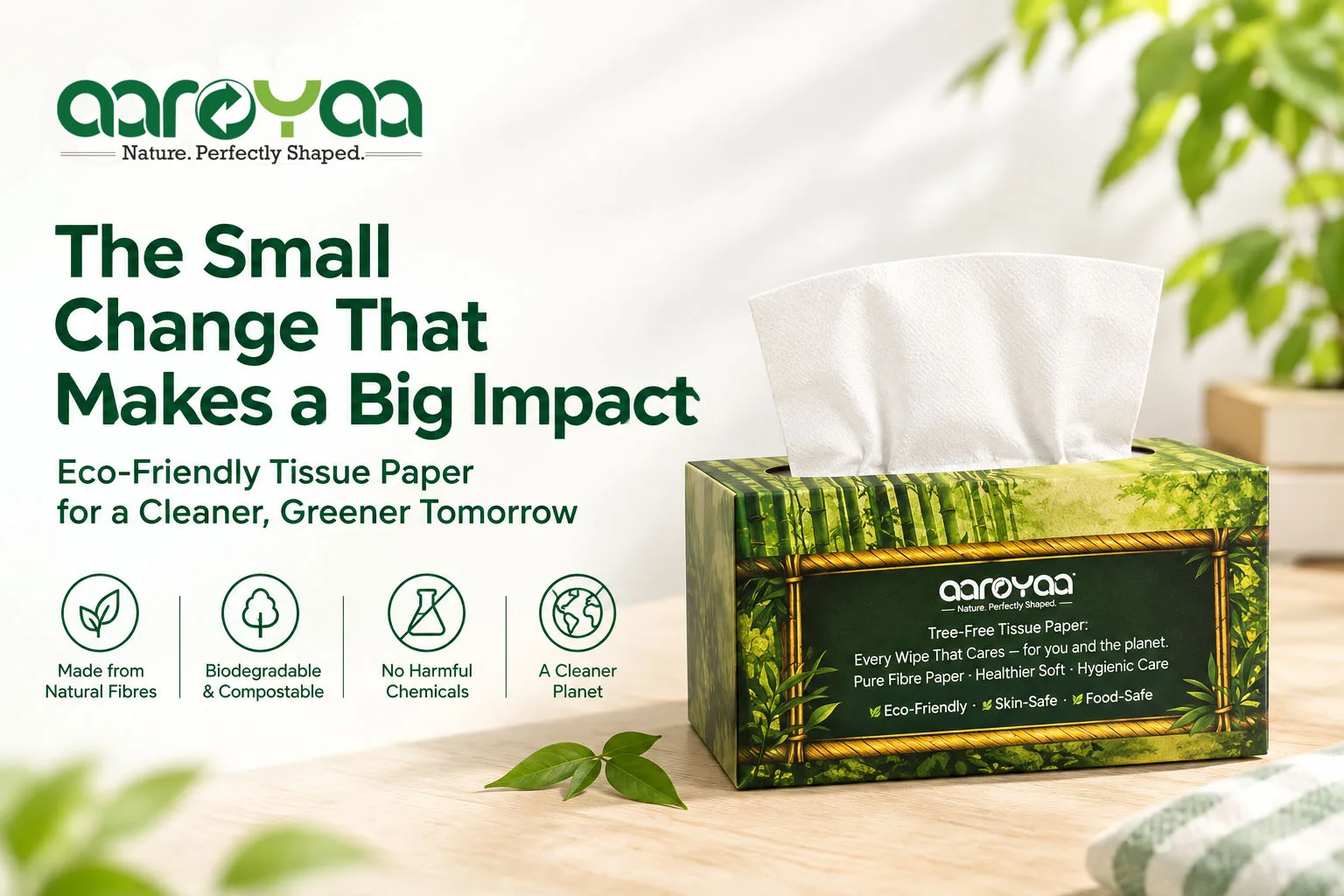
Aaroyaa’s bamboo tissue collection lists a pack of five, with 50 pulls each, alongside a premium pack of ten. The brand describes its bamboo tissues as soft and absorbent, intended for everyday use in kitchens, dining areas, offices and hospitality spaces.
The five-pack option contains 250 pulls. In our one-pack-per-week example, that would cover five weeks.
These are pull packs, so choose them for tasks you normally handle with tissues. Try one where your household reaches most often: beside the dining table or near the breakfast counter.
Notice the details that matter. Does one pull handle a small spill? Is the tissue comfortable to use? Does the pack dispense easily? An Eco-Friendly Tissue choice becomes easier to keep buying when it works well in your actual home.
The Second Habit That Makes the Numbers Better
Changing what you buy is one opportunity. Using only what you need is another.
Suppose your household avoids just two unnecessary pulls a day. Over a year, that is 730 fewer pulls—roughly the contents of 14.6 packs containing 50 pulls each.
Start with one tissue and take another if needed. Keep a clean, washable cloth nearby for routine counter spills, and protect spare tissue packs from splashes.
Together, thoughtful purchasing and sensible use give you two ways to improve the same daily routine.
Make Your Next Refill Count
You don’t need to overhaul the kitchen this weekend. Finish your current pack, note how long it lasted, and choose the next one deliberately.
Explore Aaroyaa’s Eco-Friendly Tissue range and try its bamboo tissues with your household’s everyday tasks.
One refill is a small purchase. Over the years, it becomes a long series of choices about what gets made, bought and used.
The next choice is already on your shopping list.
More stories from Aaroyaa
Eco-Friendly Disposable Plates: A Convenient Solution for Modern Living
Made in India, Made for Earth: Eco-Friendly Paper Straws and Our Greener Independence