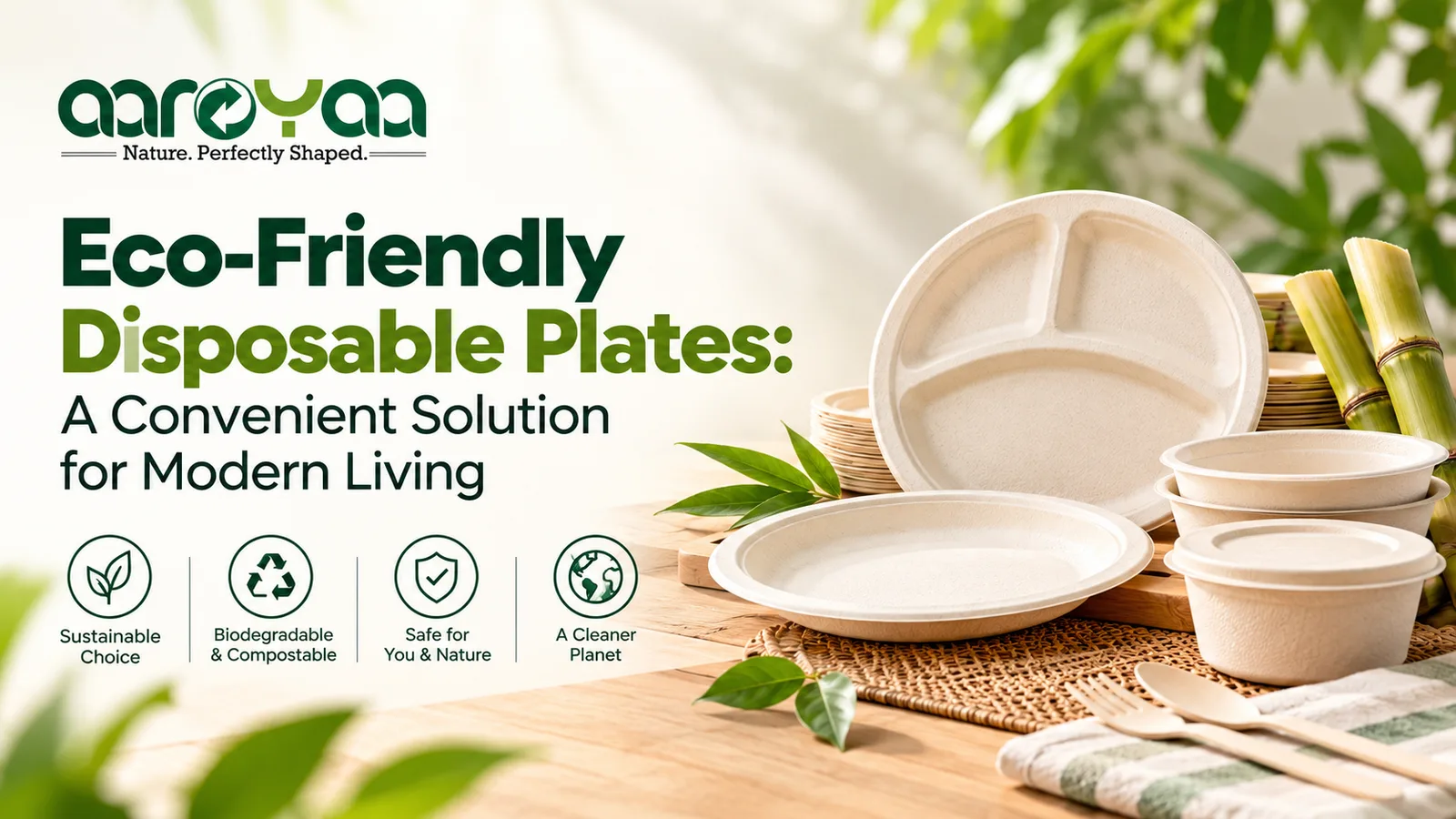

Why Gen-Z Is Ditching Plastic at Parties (And Why Eco-Friendly Bagasse Plates Won)
Go to a house party this year and count the thermocol plates. You'll probably find none. Somewhere between 2022 and now, the white foam plate quietly disappeared from birthdays, terrace dinners, hostel farewells and Sunday potlucks. Nobody announced it. It just stopped turning up. In its place: eco-friendly bagasse plates, wooden cutlery, and a general sense that plastic looks a bit cheap now.
Some of this is real climate concern. A lot of it is more practical than that.
Some of it is just the law.
India banned 19 single-use plastic items on 1 July 2022. Plates, cups, cutlery, straws and thermocol are all on the list. So the stack of foam plates that used to sit in every kirana shop isn't legal to sell any more. That changes what's actually available to you at 8 pm when you realise there aren't enough plates for everyone.
Bagasse filled the gap. It's the fibre left behind after sugarcane is crushed for juice — a leftover that used to get burnt.
Some of it is that everything ends up on a story.
This is the part nobody says out loud. Every gathering gets photographed. A white foam plate with a folded tissue on it looks like a 2010 office birthday. A matte brown fibre plate doesn't.
Bagasse comes out in the natural colour of the pulp, no dye added. It sits well next to wooden spoons, glass bottles, whatever you've done with the table. Food looks like food on it, which sounds obvious until you've seen biryani on plastic under a tube light.
What people are actually ordering
Sizes matter more than you'd think, and most people overbuy.
For snacks, cake and starters, a 6-inch round does the job at ₹2.88 a plate in a pack of 50 — the cheapest thing in the range. The 6-inch triangle at ₹3.72 is built for pizza slices, samosas and sandwiches, and it looks better in a photo than a round plate holding a triangle of food.
The 7-inch round at ₹4.80 is the default party plate. If you're only buying one size, this is it.
Once people are sitting down and eating properly, go bigger. A 9-inch round is ₹8.16, a 10-inch is ₹10.56, and the11-1 and 12-inch plates run ₹11.52 and ₹13.44. Those are thali territory — biryani with two sides, or a full meal.
The compartment plate is the actual trick.
Here's something worth knowing before you order. On Aaroyaa's range, compartment plates cost less than plain plates of the same size. The 9-inch three-compartment is ₹7.92, compared with ₹8.16 for the plain 9-inch. At 11-inch, the four-compartment is ₹10.80 while the plain one is ₹11.52.
That's backwards from what you'd expect, and it works in your favour. Compartments fix the real party problem: gravy sliding into the gulab jamun while somebody eats standing up with a drink in the other hand. If your menu has two curries and a sweet, buy the compartment version. Cheaper plate, fewer complaints.
Where these aren't the answer
Six friends eating dinner at your place. Just use your own plates. Eco-friendly bagasse plates earn their place when the washing up is the real problem — thirty people, one sink, nobody volunteering.
And they only compost properly if they actually reach compost. Thrown into a mixed bin headed for landfill, bagasse breaks down slowly, as most things do. If your building has wet waste collection, that's where the plates go after the party.
They also cost more than thermocol did. Three to five rupees a plate instead of one. For forty guests, that's about two hundred rupees extra. Worth knowing before you order, though most people find it's the least expensive part of the evening.
Aaroyaa makes bagasse plates from 6-inch through to 12-inch, including compartment plates for meals with gravy, in pack sizes that suit a house party or a full event. Browse the plates range or talk to the team about a bulk order.
Frequently Asked Questions
Common questions related to this article.
Can I put hot, oily food like biryani on a bagasse plate?
Yes. Bagasse handles heat and oil better than thin paper plates, which is why caterers use it. It won't go limp under a serving of biryani or a gravy dish. Just don't plate up an hour before people eat — serve fresh and the plate stays firm.
How many plates should I order for a party of 30?
Count roughly 1.5 plates per guest. People take a second one for dessert, and someone always abandons the first. For 30 guests, a pack of 50 covers you comfortably.
Are eco-friendly bagasse plates actually better than paper plates?
For Indian food, yes. Paper plates soften under sambar, rajma or anything with gravy. Bagasse holds up. Plain uncoated paper plates are fine for dry snacks and cost less, so it depends on what you're serving.