Banned, Allowed, Grey Area: A Restaurant Owner's List of Single-Use Plastic Items (And Where Biodegradable Tableware for Restaurants Fits)
Short answer first, because most people land on this page with an inspection date in their head.
Since 1 July 2022, India has banned 19 single-use plastic items. Plates, cups, glasses, forks, spoons, knives, straws, stirrers, trays and the thin film around sweet boxes are all on that list. Items made from bagasse, areca leaf, wood or plain paper are not on it at all, because they aren't plastic. That is the main reason biodegradable tableware for restaurants became the default swap in Indian kitchens rather than a nice-to-have.
The trouble sits in the middle. Laminated paper cups. Thermocol food boxes. Bags stamped "oxo-biodegradable". Compostable plastic straws that arrive without a single piece of paperwork. Owners rarely get pulled up for the obvious stuff. They get pulled up for the in-between stuff, usually because a supplier told them it was fine.
Here is the whole thing in one table. Print it, stick it on the store-room door, and check your last three invoices against it.
The banned side: four items that catch people out
Most owners already binned the plastic spoons. These four are the ones that survive a clean-up.
The straw on the juice pack. If your café serves 200 ml tetra packs with a plastic straw glued to the side, that straw is banned. The beverage industry pushed hard for an exemption and didn't get one. Ask your distributor for paper-straw stock.
Serving trays. People read "trays" as delivery trays and forget the plastic thali trays sitting in the buffet line. Both count.
The film around the sweet box. Bakeries, mithai counters and gift-box operations use it without thinking. It's explicitly named in the notification.
Non-woven carry bags. These are the soft, fabric-like bags that feel reusable. They're plastic. Each sheet has to be at least 60 GSM. Most cheap ones sold at ₹2 a piece are nowhere close, and the supplier will not volunteer that number.
What's allowed, and where biodegradable tableware for restaurants actually sits
This part is simpler than the compliance blogs make it sound.
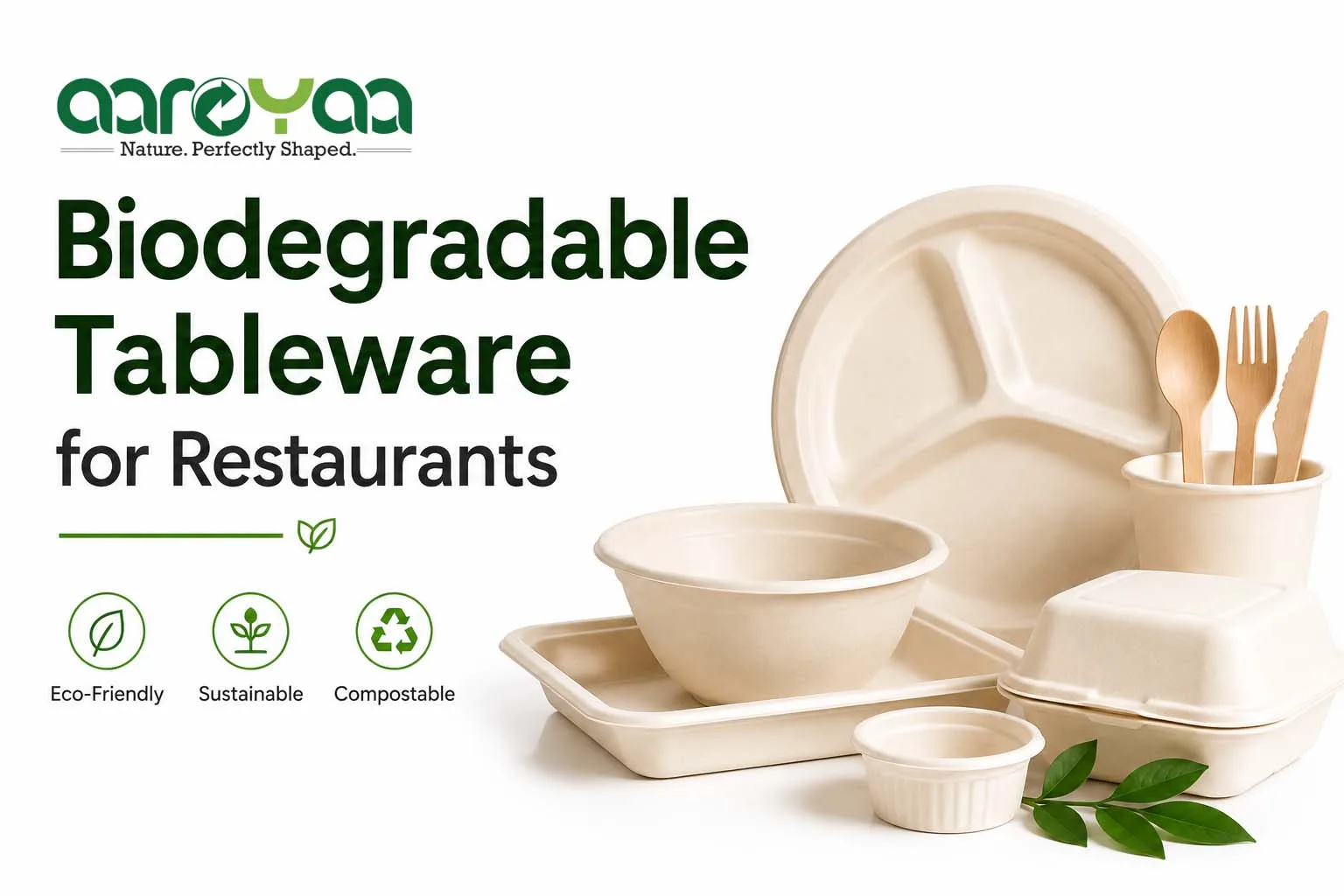
The rules govern plastic. Bagasse, areca leaf, wood and plain paper are not plastic. They sit outside the plastic waste rules entirely, which means there's no thickness limit to track, no certificate to renew, and nothing for an inspector to measure. That's the practical appeal of biodegradable tableware for restaurants: it removes the item from the argument instead of winning the argument.
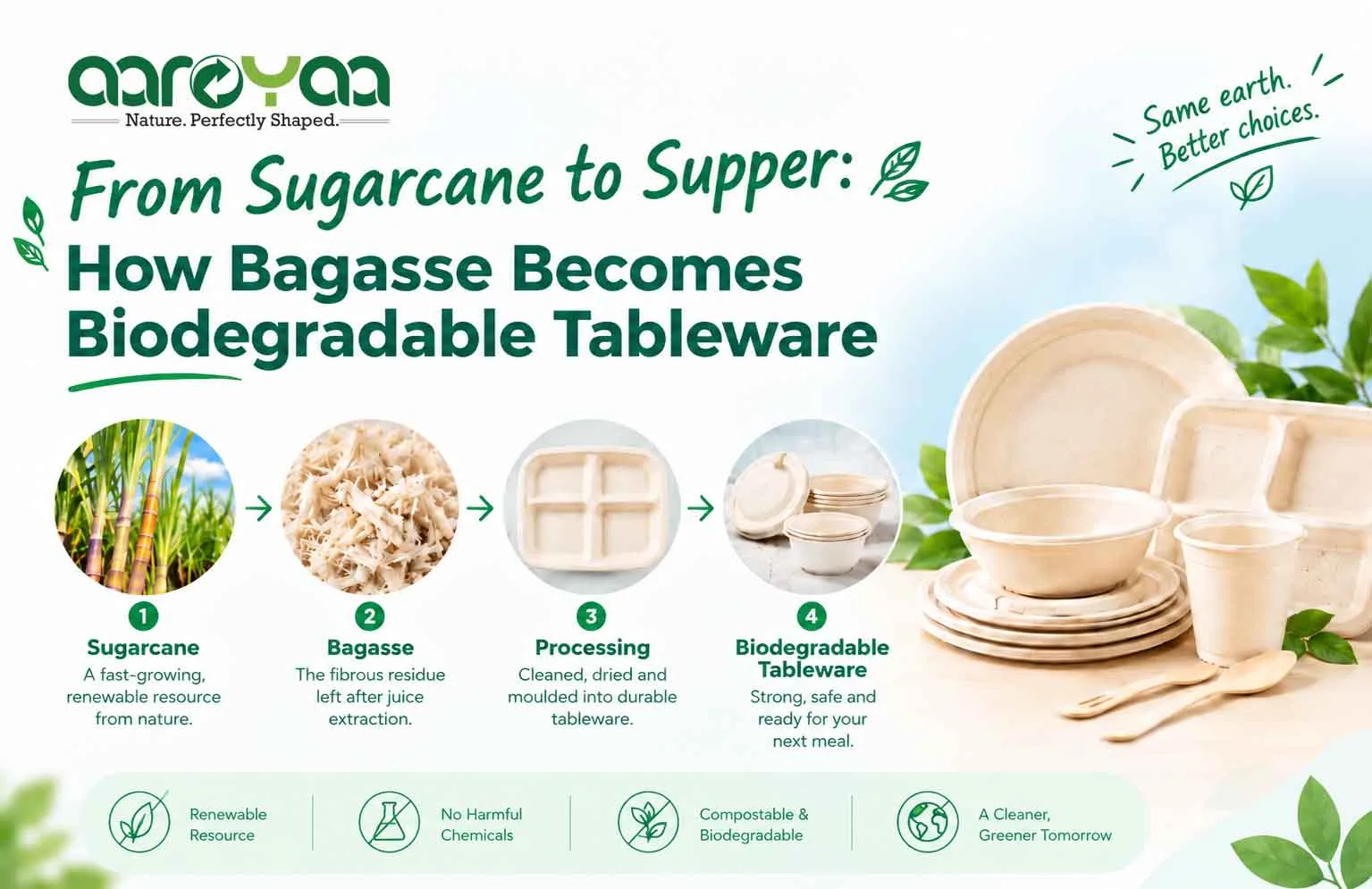
Bagasse is the hero. It is the fibre left behind after crushing sugarcane, which is then moulded into plates, bowls, trays and compartmentalised thalis. It is more durable than paper and can withstand the hot oil and gravy of Indian cooking. It does not become soggy when sambar is poured over it, as a thinner paper plate would. Areca leaves offer a sturdier and more premium look for special occasions. Wooden cutlery replaces the spoon and fork, and paper straws take the place of the straw. The latter needs testing, as quality varies greatly, so make sure to test three different brands in a cold coffee before ordering 10,000.
Then there's compostable plastic, which is a different animal and where a lot of restaurants get confused.
Compostable plastic items are exempt from the single-use plastic ban. But the exemption is conditional. The material has to meet IS/ISO 17088, the manufacturer needs a certificate from the Central Pollution Control Board, and since the 2024 amendment, the product has to carry the label "compostable only under industrial composting". Miss any of those, and you're holding banned goods. A green leaf printed on the pouch is not a certificate.
So the honest comparison is this. Fibre-based tableware needs no paperwork. Compostable plastic needs paperwork, needs it renewed, and needs you to keep a copy on file. Both are legal. Only one of them is a five-second answer during an inspection.
The grey area, explained item by item.
1. Laminated paper cups
This is the big one, and it's less grey than most suppliers admit.
A typical paper cup consists of 95% paper and a thin layer of low-density polyethene to hold liquid. Companies that manufacture them argue that 5% of plastic is not enough to classify them as plastic cups. But the Rajasthan High Court has ruled that since they can't be reused, laminated paper cups fall under the single-use plastic ban, and orders for their closure have been signed by the State Pollution Control Board in June 2023.
That was a single-judge ruling from one High Court, so enforcement isn't uniform across states. But if you're planning your next 12 months of purchasing, planning around that ruling is safer than planning against it.
2. Thermocol food containers
The notification names polystyrene "for decoration". Thermocol plates, cups and glasses are separately banned as plates, cups and glasses. What sits in between is the thermocol box a caterer uses for transport. On paper, there's an argument. In practice, enforcement teams tend to see white thermocol and act. Several states and city corporations have also banned it outright under their own orders. Not worth defending.
3. "Oxo-biodegradable" and "d2w"
These are plastics with an additive making them break down faster. Break down, not biodegrade. They turn into smaller and smaller pieces of plastic. Indian regulations consider compostable plastic the exception, and oxo-biodegradable plastic is not an exception. If your supplier talks about “degradable,” but does not provide test reports according to the IS/ISO 17088 standard, you are dealing with prohibited plastic.
4. Compostable plastic without documents
Same idea, new wrapping. Who exactly does the exemption apply to? Well, the material is certified, not the claim. Before placing a repeat order, ask for three things: the CPCB certificate number, IS/ISO 17088 test report, and a photo of the printed label on the product itself. A supplier who has them will provide them the same day, and one that doesn't will send you a brochure.
5. Lids, sachets and the EPR question
The plastic lid on a paper cup isn't named in the banned list, which is why it's still everywhere. It's still a plastic single-use item, and it's an easy thing for an inspector to point at. Condiment sachets and multi-layer pouches aren't banned either, but they carry Extended Producer Responsibility obligations, and since 1 July 2025, plastic carry bags and multi-layered packaging need a barcode, QR code or unique ID carrying thickness and manufacturer details. If your restaurant's name is printed on the packaging, you may be a "brand owner" under those rules. Worth ten minutes with your state pollution control board's helpline to confirm where you stand.
What getting it wrong actually costs.
Under Section 15 of the Environment (Protection) Act, 1986, violations can attract a fine of up to ₹1 lakh, imprisonment up to five years, or both. Municipal corporations run their own spot fines on top. Maharashtra's schedule, for example, starts at ₹5,000 for a first offence and climbs to ₹25,000 with prosecution by the third.
But the fine is rarely the expensive part. The expensive part is the seizure. Enforcement teams take the stock, and if you've just bought three months of cups at a bulk discount, that discount evaporates in an afternoon. Then there's the notice pinned to your door while a queue forms outside.
One more addition to your watch list: Plastic Waste Management (Amendment) Rules, 2026, notified on 31 st March 2026, which further strengthen the requirements for recycled content in plastic packaging and bring food contact packaging under FSSAI marking standards. While it does not add any new prohibited items, it increases your due diligence requirements from your packaging suppliers every year.
10 minutes preparation before your service commences tonight:
- Walk through your storeroom and identify all plastic items that come into contact with customers’ mouths or hands: cups, cutlery, straws, stirrers, plates, trays, etc.
- Check the carry bags. Look for the printed micron figure. Under 120, they go. Non-woven bags need 60 GSM printed on them.
- Look at your cups. If they're paper with a shiny inner lining, plan a replacement.
- Pull your last three invoices. Anything described as "biodegradable", "compostable" or "eco-friendly" needs a certificate on file. Email the supplier today and ask.
- Check the delivery counter separately. Cutlery packs, sauce sachets, sealing film and lids live there and get missed in every audit.
- Photograph the shelf after the clean-up. If a question comes up later, a dated photo is useful.
Most kitchens finish this in under fifteen minutes and find two or three things they didn't expect.
Where to start if you're switching this month
You don't need to replace everything at once. Start with the four items inspectors look at first: cups, cutlery, plates and carry bags. Get those right, and the rest of the list becomes housekeeping. For most kitchens, moving those four over to biodegradable tableware for restaurants clears the majority of the risk in a single purchase order.
Aaroyaa offers a wide range of bagasse plates, bowls, compartment thalis, meal trays and wooden cutlery designed for Indian food in bulk, in sizes that suit the requirements of restaurants, cafes, cloud kitchens and catering companies. Get in touch if you need help choosing the right size for your establishment or for a quote that can get you stocked for the month. Explore the range of tableware or contact us for a bulk order
Frequently Asked Questions
Common questions related to this article.
Are paper cups with a plastic coating banned for restaurants in India?
Treat them as banned. The notification bans "plastic cups", and in June 2023 the Rajasthan High Court ruled that laminated paper cups, roughly 95% paper and 5% LDPE, come within that ban because the plastic layer can't be reused. Enforcement varies by state, so you may still see them being sold. If you're deciding what to buy for the next year, switch to an uncoated or fibre-based option rather than betting on a lenient inspection.
Is biodegradable tableware for restaurants legal everywhere in India, or do states have their own rules?
Bagasse, areca leaf and wooden items are not plastic, so the central plastic waste rules don't touch them anywhere in India. States can and do add stricter local rules, but those rules target plastic and thermocol, not sugarcane fibre or leaf. The only category where state-level detail matters is compostable plastic, since some corporations ask to see the CPCB certificate on the spot. Keep a copy in your compliance folder either way.
My supplier says his plastic cutlery is "100% biodegradable". Can I use it?
Not on his word. According to Indian regulations, only compostable plastic is an exception, which requires IS/ISO 17088 testing reports, a certificate from the CPCB for the manufacturer, and the phrase "compostable only under industrial composting" on the packaging. "Biodegradable," "eco-friendly," "oxo-biodegradable," and "d2w" are all marketing terms. The necessary documents should be provided within one business day of your request; otherwise, you have your answer. On that note, wooden or bagasse (sugarcane) cutlery doesn't have to go through this process at all.
More stories from Aaroyaa
Sustainable Disposable Dinnerware: How to Build a Full Setup from Scratch
Biodegradable Food Containers: What They Are and How to Choose the Right Ones