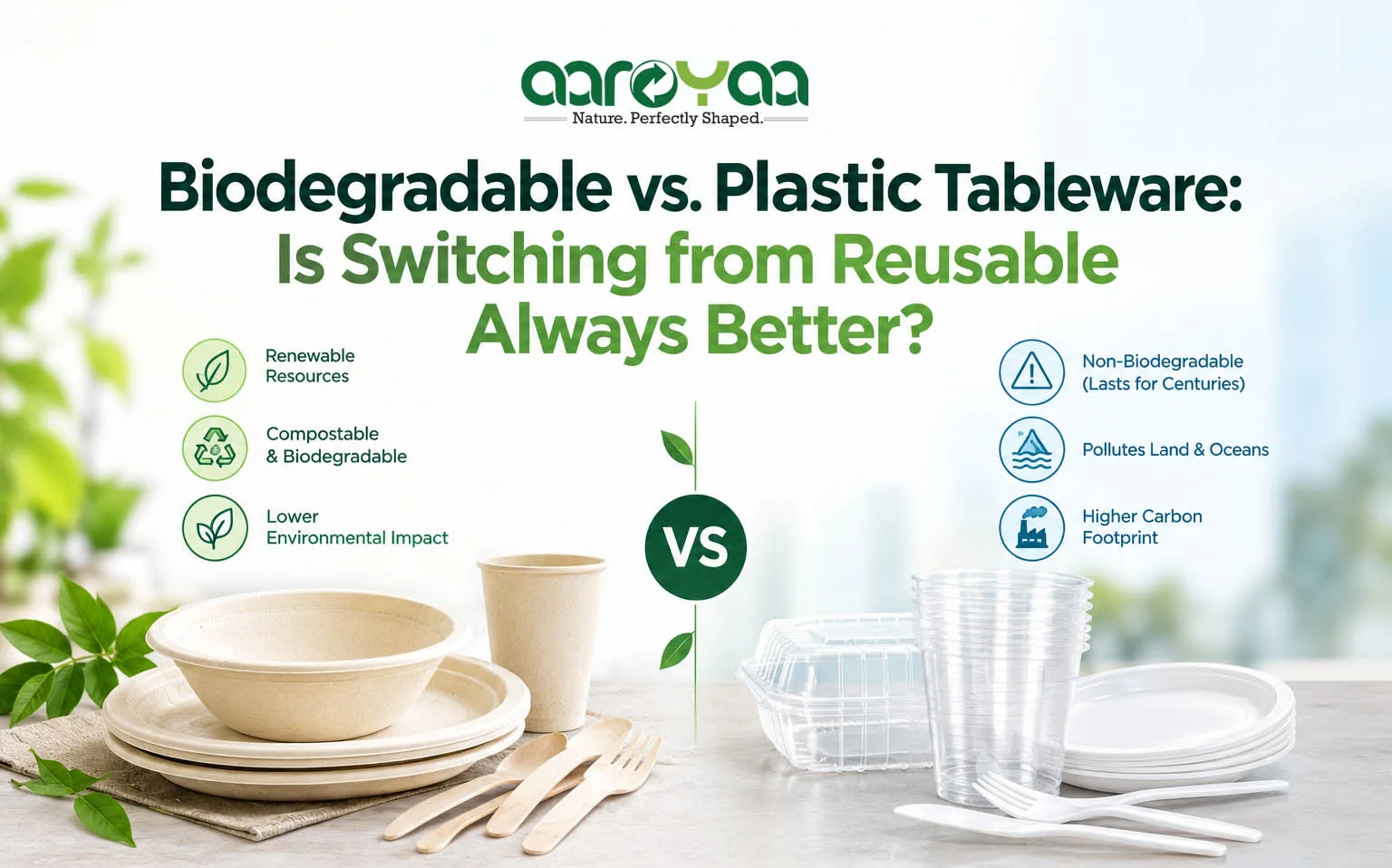
Biodegradable vs. Plastic Tableware: Is Switching from Reusable Always Better?
You open the kitchen cupboard and see a stack of reusable plastic plates. They still do their job. But with plant-based alternatives available, you wonder whether replacing them would be a better choice.
The biodegradable vs plastic tableware question deserves an honest answer: switching isn’t always better. A plate used for hundreds of meals presents a different choice from one bought for a single afternoon.
The useful question is what works for the way you actually eat, host and clean up.
Biodegradable vs plastic tableware: start with everyday use
Imagine a family of four having dinner at home. They already own reusable plates, have somewhere to wash them and will need them again tomorrow.
Replacing those plates with disposables means opening a fresh pack for every meal. Even plant-based products need materials, manufacturing, packaging and transport.
A UNEP review of tableware life-cycle studies found that reusable options generally performed better environmentally, with washing-related water use an important exception. How often items are reused and how they are washed both matter.
For this household, continuing to use suitable, serviceable plates is a sensible starting point. Follow the manufacturer’s care and temperature instructions, and make washing efficient.
There’s no need for a cupboard clear-out simply because another material sounds greener.
Now imagine thirty people arriving for lunch
A birthday lunch changes the calculation. You have eight dinner plates, thirty guests and a kitchen that will already be busy.
First, consider borrowing extra plates or asking the caterer about reusable crockery and washing. If that’s manageable, it’s worth exploring.
Sometimes it isn’t. Transport, storage, washing facilities and the number of people helping all affect what is practical.
This is where disposable biodegradable tableware can have a useful role. It offers an option for occasions when collecting and washing reusable dishes is difficult. That convenience alone, however, doesn’t prove a lower overall environmental footprint.
Aaroyaa’s tableware range includes round plates, compartment plates, bowls and meal trays. Choose around the menu: a full lunch needs different serving space from cake and a few snacks.
Before a big order, try a small pack with the food you plan to serve. Check how it handles the portion size and serving time.
What about the weekly picnic?
An occasional outing can quietly become a regular disposable habit.
If your family goes to the park every Sunday, consider a reusable picnic set and a container for bringing used dishes home. You have a predictable routine, so planning collection and washing may be straightforward.
For a larger, one-off gathering away from washing facilities, disposable plates may be more convenient. Buy the quantity you need, arrange collection and bring every used item back for appropriate disposal.
A biodegradable label is never a reason to leave a plate outdoors.
The part people forget: where does the plate go?
In the reusable plastic vs biodegradable tableware decision, disposal deserves as much attention as the purchase.
Biodegradable and compostable aren’t interchangeable promises. A biodegradable claim alone doesn’t tell you how quickly an item will break down in your local conditions.
Composting requires managed conditions, including oxygen and moisture, and facilities differ in what they accept. The EPA’s composting guidance explains why the process and accepted materials matter.
Before ordering, ask:
● Is this specific product suitable for home or industrial composting?
● What testing or certification supports that claim?
● Will my local waste service or composting facility accept used plates?
If suitable processing isn’t available, you can’t assume the plate will become compost after disposal.
Make a switch that fits your life.
The most useful answer to biodegradable vs plastic tableware may involve keeping everyday reusables and choosing disposables carefully for particular occasions.
Cost follows the same practical logic. For regular meals, consider repeated purchases alongside washing costs. For an event, compare the complete serving setup, including bowls, cutlery and delivery.
Planning a gathering where disposables make sense? Explore Aaroyaa’s plates, bowls and trays, check the product details and start with a pack that suits your menu.
Keep what still serves you well. Buy thoughtfully for the occasions that need something different. And decide where the used tableware will go before the first guest arrives.
More stories from Aaroyaa
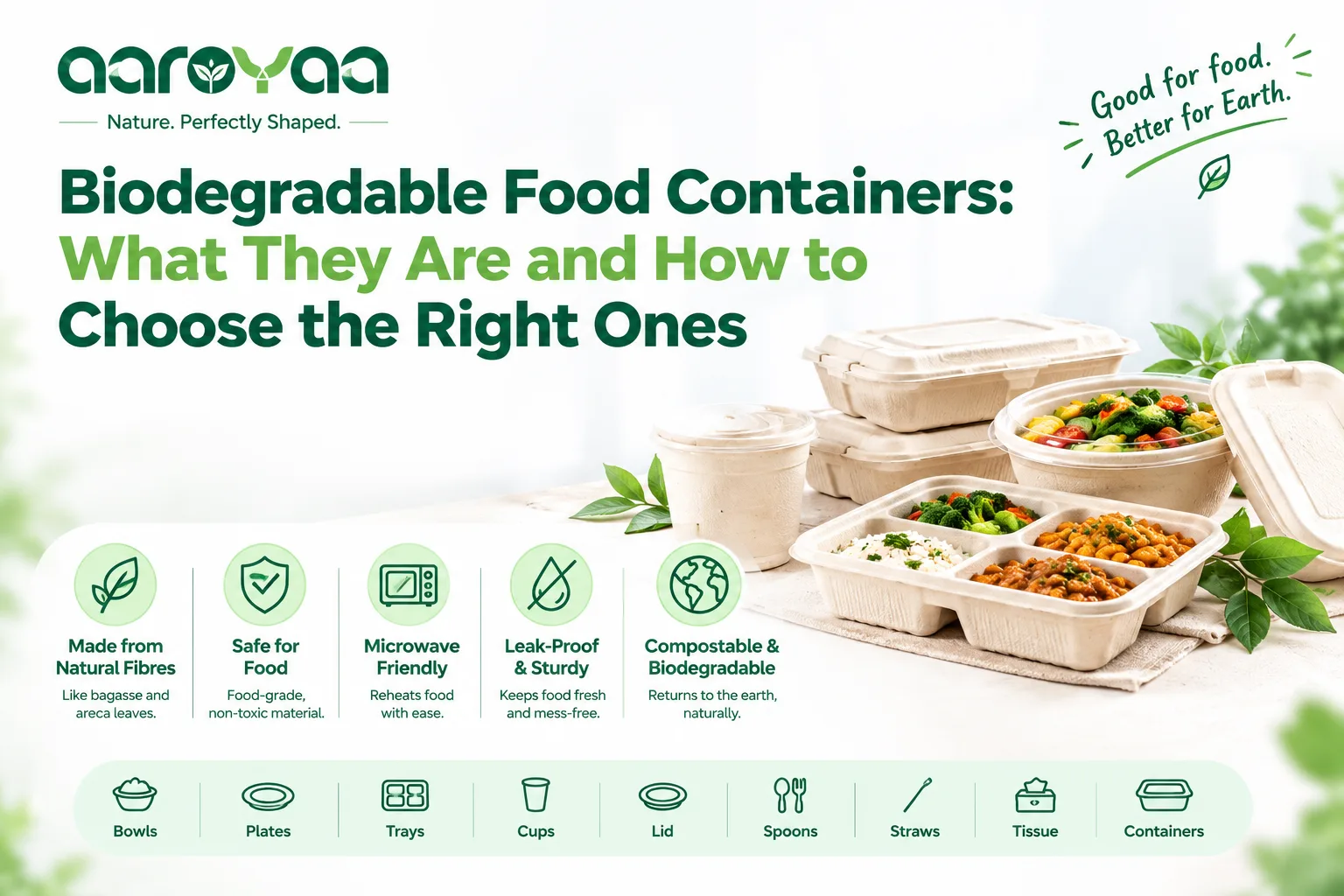
Biodegradable Food Containers: What They Are and How to Choose the Right Ones
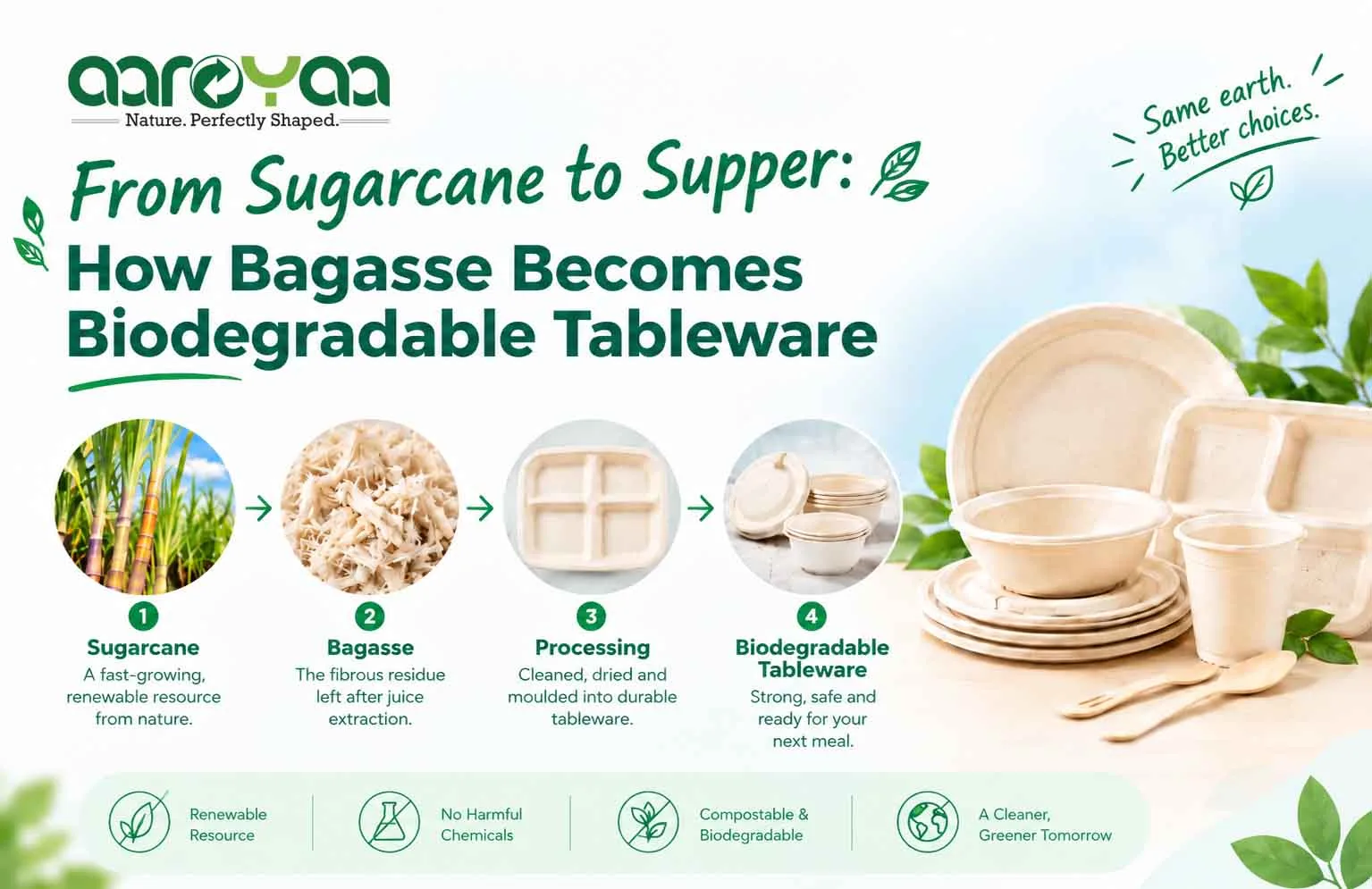
From Sugarcane to Supper: How Bagasse Becomes Biodegradable Tableware